
What happens when a cleared parking lot still leaves a slick entrance or an overlooked sidewalk? Effective winter risk management for commercial properties connects each hazard to a response, a responsible person, and documented follow-up. In Denver, snow and ice can affect access, operations, and visitor safety across an entire site.
A dependable plan starts by identifying the areas where conditions could disrupt access or create a hazard, then deciding what happens when the weather changes. This checklist helps you map property-specific risks, prioritize parking areas, sidewalks, ramps, and entrances, and set practical snow, ice, and documentation procedures. It also explains how to coordinate commercial plowing, sidewalk clearing, de-icing, and snow hauling around your site’s needs.
Snow Removal Denver serves commercial properties in Denver County and the surrounding Denver Metro area. The company is fully insured, has 47+ years in business, and provides 24/7 dispatch staffed during every storm, with crews operating around the clock during snow events and on-call personnel 7 days and nights. Its no slip-and-fall liability guarantee includes photo documentation of each visit and commercial ice melt applied to sidewalks and entries. Use the steps ahead to build a clear plan before winter conditions disrupt your property.
Key Takeaways
- Build winter risk management for commercial properties around a site map that identifies priority routes, pedestrian areas, loading access, and emergency access.
- Match each hazard to a practical control: plowing for snow accumulation, sidewalk clearing and de-icing for pedestrian areas, and snow hauling when piles affect site use.
- Set storm-response responsibilities, share site priorities and access details with your snow-service team, and review gaps after each event.
- Keep visit records and photos so your team can review snow and ice response across the property.
- Denver Snow Removals is fully insured and serves Denver County and the surrounding Denver Metro area. Each visit is documented with photos, and commercial ice melt is applied to sidewalks and entries under the company’s no slip-and-fall liability guarantee.
Winter Hazards for Denver Commercial Properties
Denver property managers need to plan for more than snow in a parking lot. Employees, customers, deliveries, and emergency access all depend on routes that remain usable as snow and ice change site conditions. A clear plan helps your team identify the most important areas first instead of treating every part of a large property as equally urgent.
Winter risk management for commercial properties means identifying snow and ice hazards, assigning a response and responsible party to each one, and reviewing what happened after an event. This approach helps connect site conditions to specific actions. Weather risk management offers a broader foundation for considering how weather-related risks can be assessed and managed.
For a Denver-focused site review, begin with the routes people and vehicles use most. Consider how conditions may change during the day, including where melting snow could refreeze and affect access later.
Which winter hazards affect commercial sites first?
Start with areas that see frequent use, then include routes needed for deliveries and emergency access. Walk the property with a site map and mark:
- High-use parking areas and the vehicle routes connecting them to building entrances.
- Sidewalks, entrances, ramps, and other pedestrian paths.
- Loading zones where snow buildup could interfere with deliveries or access.
- Emergency routes that need to remain clear and accessible.
Denver winter conditions can shift during the day. Snow may melt in sun-exposed areas and later refreeze overnight, leaving slick patches even after the main accumulation has been cleared. Mark these changing areas on the site map, especially transitions such as entrances and walkways where foot traffic concentrates. Include them in follow-up inspections rather than assuming an initially clear route will stay clear.
How can winter hazards disrupt site operations?
During active snowfall, blocked drive lanes or entrances can slow arrivals, deliveries, and movement across a commercial lot. Snow-covered sidewalks and icy entries can create pedestrian-safety concerns for employees and visitors. When a key route is difficult to use, opening tasks may take longer and businesses may need to adjust how people reach the site.
Some hazards remain after the initial storm response. Snow near a loading zone can reduce working space, while melting and refreezing can make a route slick after it looked clear. Separate immediate needs, such as clearing priority access during a storm, from follow-up checks for ice and changing conditions. Assigning responsibility for those checks helps prevent gaps between snow clearing and ongoing site oversight.
Clear access, active ice control, and follow-up checks work together to support safer movement and operational readiness.
How to Audit Winter Risks Across a Denver Commercial Property
A useful site audit turns winter risk management for commercial properties into a practical map of locations, priorities, and responsibilities. Whether you manage a retail parking area, office campus, industrial park, commercial lot, or HOA community, walk the property before winter conditions arrive. Note where people, vehicles, deliveries, and emergency access need to move, then use those observations to shape your snow and ice plan.
For broader storm-preparation steps, use this Denver business winter preparedness guide alongside your property-specific audit. Resources such as PRISM Risk Management can also inform planning for winter-storm risks to buildings and infrastructure.
What should a commercial winter site map include?
Mark the areas that need service, the routes connecting them, and any conditions that could affect access after snow is cleared. Make the map easy to share with internal staff and your snow-service team.
- Parking areas, drive lanes, sidewalks, ramps, and building entrances.
- Loading areas and emergency access routes.
- Potential snow-pile locations, including places where piles could obstruct visibility, access, or later clearing.
- Spots where melting and refreezing may warrant follow-up during site reviews.
Consider how the property works at different times. A retail entrance may see steady pedestrian use, while an office campus may have several connected paths and parking areas. An industrial property may need particular attention to loading access. Record these differences instead of relying on a generic map.
How should managers prioritize hazards and responsibilities?
Rank each zone according to how people use it, pedestrian exposure, operational importance, and access needs. Prioritize routes serving entrances, connecting parking to buildings, supporting deliveries, or preserving emergency access. Lower-use areas still belong on the map, but their role may differ from a main entrance or heavily used walkway.
Use this ordered walk-through to turn observations into action:
- Map zones: Mark parking, pedestrian routes, entrances, loading areas, emergency access, and snow-pile locations.
- Rank exposure: Identify which areas matter most based on site activity, pedestrian use, and operational needs.
- Record access needs: Note routes that need to remain usable for visitors, employees, deliveries, or emergency access.
- Assign responsibility: Name an internal contact to share priorities with the snow-service team and review service records.
- Review the plan: After a storm, compare mapped priorities with actual site conditions and adjust them as needed.
Don’t impose one treatment schedule across every property. A retail lot, HOA community, and industrial park can have different traffic patterns and access priorities, so service planning should reflect the site. If your audit points to commercial plowing or ice management support, Denver Snow Removals provides commercial snow and ice services in Denver County and the surrounding Denver Metro area. Its commercial snow response can be planned around your property’s priorities.
Compare Winter Risk Controls: Snow Clearing, Ice Management, and Documentation
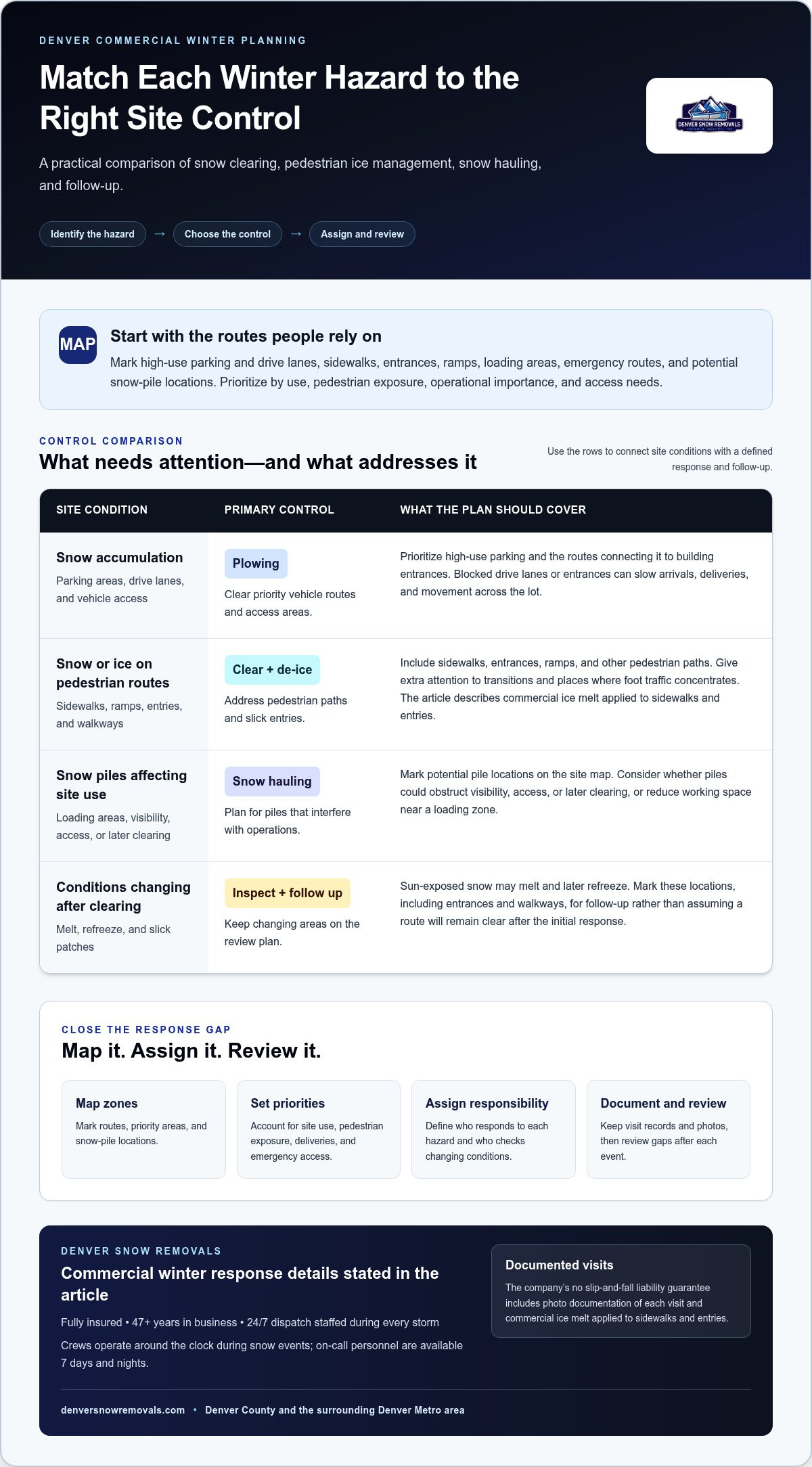
A strong winter risk management plan matches each control to a specific site need. Parking-lot plowing clears vehicle areas, while sidewalk clearing and de-icing address pedestrian routes. Snow hauling can help when piles take up space or interfere with access. Documentation gives managers a record to review after service. No single control covers every exposure, so use the site map and operational priorities to define the work.
For a closer look at commercial lot service, see Denver commercial snow removal. The right combination depends on how the property is used and which routes need attention.
| Control | Area and purpose | When it matters |
|---|---|---|
| Parking-lot plowing | Clears accumulated snow from vehicle areas and drive lanes. | Supports vehicle access and helps keep parking areas usable during snow events. |
| Sidewalk clearing | Opens pedestrian routes, such as walks between parking and building entrances. | Addresses snow accumulation where employees, visitors, and customers walk. |
| De-icing | Applies commercial ice melt to support treatment of slippery pedestrian areas. | Can address slick conditions on sidewalks and at entries, including after melting and refreezing. |
| Snow hauling | Removes accumulated piles from designated areas. | May be useful when piles reduce usable space, obstruct visibility, or complicate access and later clearing. |
| Service documentation | Records visits so managers can review service activity and follow-up needs. | Helps connect completed work with site observations and post-event review. |
Which winter controls address different site needs?
Plowing and sidewalk clearing address separate parts of a property. A cleared lot does not automatically mean that walkways and entrances are clear. De-icing supports treatment of slippery pedestrian areas rather than removing snow accumulation. Snow piles may also need attention if they limit parking capacity or block sightlines. Set the scope and timing around mapped zones, site operations, and changing conditions rather than applying a universal schedule.
Denver Snow Removals provides commercial snow and ice services in Denver County and the surrounding Denver Metro area. Its ice management services address pedestrian-area treatment as part of a site-specific winter plan.
What should managers expect from service records?
Use records to review where service took place and identify areas that may need follow-up. Denver Snow Removals documents each visit with photos and applies commercial ice melt to sidewalks and entries. The company’s no slip-and-fall liability guarantee includes documented visits and commercial ice melt application. These records support a clearer post-event review while managers continue to monitor site conditions and communicate changing priorities.
For commercial properties seeking snow clearing and ice management in Denver County and the surrounding Denver Metro area, Denver commercial snow and ice service can be aligned with mapped priorities and site needs.
Use This Storm-Response Checklist to Reduce Operational Gaps
A mapped site plan only helps if the right people can act on it during a storm. Set a clear handoff between property staff and the snow-service team, then use the same priorities to guide checks and post-event review. This keeps winter risk management for commercial properties connected to day-to-day access needs, not just a pre-season document.
Before conditions change, share the site map, priority routes, access instructions, and operational contacts with your snow-service team. Denver Snow Removals provides 24/7 dispatch staffed during every storm, with crews operating around the clock during snow events and on-call personnel available 7 days and nights. For more detailed ice-control planning, use this Denver ice management guide alongside your property checklist.
What should the property team do before and during a snow event?
Decide who will communicate site-specific needs and how updates will reach the people responsible for access and operations. Keep public-facing instructions consistent with actual conditions. If an entrance or route is temporarily difficult to use, make sure staff and visitor guidance reflects that change.
- Before the event: Share mapped priorities, site access details, operational contacts, and locations needing special attention, such as loading zones or emergency routes.
- During the event: Check priority parking routes, sidewalks, and entrances as conditions change. Record observed snow or ice concerns and pass relevant updates through the agreed communication path.
- After melting or refreeze: Revisit pedestrian areas and entries that may have become slippery after earlier clearing. Note follow-up needs instead of assuming the initial response covers later conditions.
Checks should reflect the property’s use and current conditions. A retail entrance may need attention as customer access changes, while a commercial loading area may be important to delivery operations. Don’t rely on a fixed schedule as a substitute for observing the site.
How can managers close out and improve after an event?
After conditions settle, compare service records and photos with the site map and concerns reported by staff. Note where service took place, which areas needed follow-up, and whether snow piles or changing conditions affected access. Keep the review focused on observations and operational improvements.
- Record recurring trouble spots, such as a refreeze-prone entry or a route obstructed by snow storage.
- Update the map and share revised priorities with the people responsible for the next response.
- Keep service records with related site notes so the team can review activity and follow-up together.
Documented visits help managers review service activity, match it to site conditions, and identify follow-up needs. Denver Snow Removals documents each visit with photos and applies commercial ice melt to sidewalks and entries under its no slip-and-fall liability guarantee. The company is fully insured and serves commercial properties in Denver County and the surrounding Denver Metro area.
For a commercial snow and ice response shaped around your property’s mapped priorities, request an on-site commercial estimate.
Build a Denver Commercial Winter Plan With a Reliable Snow Response
A dependable winter plan connects mapped priorities with the right snow and ice services, clear communication, and documented visits. That framework makes winter risk management for commercial properties specific to how your Denver site operates, whether it’s a commercial lot, office campus, retail property, industrial park, or HOA community.
Denver Snow Removals is fully insured and serves Denver County and the surrounding Denver Metro area. Its 24/7 dispatch is staffed during every storm, crews operate around the clock during snow events, and on-call personnel are available 7 days and nights. Commercial services include snow plowing, sidewalk clearing and de-icing, and snow hauling. Seasonal contracts run September to May.
What makes a commercial snow response dependable?
Reliable response requires both equipment and coordination. Denver Snow Removals uses newer Chevrolet 2500HD trucks equipped with commercial-grade Boss plows, along with skid steers, tractor loaders, front loaders, road graders, Bob-cats, and de-icing equipment. Round-the-clock storm operations support coordination as site conditions change. Share your priority routes and access needs so the response reflects how your property functions.
Visit records also give property managers a useful basis for follow-up. Denver Snow Removals documents each visit with photos and applies commercial ice melt to sidewalks and entries. The company’s no slip-and-fall liability guarantee includes documented visits and commercial ice melt application at these pedestrian areas. Managers can review those records alongside their own site observations.
How can Denver property managers take the next step?
Prepare a site map before arranging an on-site commercial estimate. Mark parking areas, sidewalks, entrances, loading zones, emergency access, and any locations where snow piles could affect use or visibility. Add an internal operational contact and note which routes are highest priority. This gives the estimate discussion a practical starting point.
- Identify areas needing commercial snow plowing and sidewalk clearing.
- Mark pedestrian areas where de-icing is a priority.
- Note whether snow hauling may be needed to preserve access or usable space.
- Share operational contacts and relevant site access details.
- Request a free on-site commercial estimate tailored to the property.
Clients who sign in July or August receive priority dispatch and can lock 2026 to 2027 season rates. The contract deadline is before October 1st. Seasonal pricing depends on acreage, number of visits, and de-icing needs, so an on-site estimate can reflect the work required for your property.
With mapped priorities, relevant service options, clear communication, and photo-documented visits, your team can approach winter with a coordinated plan. Request a free on-site commercial estimate to plan snow and ice response for your Denver-area property.
Put Your Winter Plan Into Action
A winter plan works best when it stays current. As tenant needs, operating hours, traffic patterns, or site layouts change, revisit priorities and update response details before the next storm. This keeps winter risk management for commercial properties connected to the way people use the site instead of relying on last season’s assumptions.
Choose one person to maintain the site map and coordinate updates with the snow-service team. After each event, note access issues and recurring trouble spots, then use those observations to improve the next response. Consistent reviews make the plan easier to use when conditions shift quickly.
Denver Snow Removals provides commercial snow and ice service to properties across Denver County and the surrounding Denver Metro area. The company is fully insured, has 47+ years in business, and documents visits with photos while applying commercial ice melt to sidewalks and entries. Dispatch is staffed 24/7 during every storm, with crews operating around the clock and on-call personnel available 7 days and nights.
Take the next step toward a winter plan built around your property’s needs. Plan your commercial snow response with Denver Snow Removals.
Frequently Asked Questions
What does winter risk management include for a commercial property?
Winter risk management for commercial properties combines hazard identification, assigned response actions, and a review process. It can include planning for snow clearing, pedestrian-area ice treatment, internal communication, and checks after weather conditions change. For example, a retail property might set separate priorities for its main customer entrance and a less-used service area. The goal is to make responsibilities and follow-up clear across the site.
How can a property manager identify winter hazards before a snowstorm?
Walk the property before winter conditions arrive and assess how people, vehicles, and deliveries use it throughout the day. Include busy periods such as shift changes or scheduled deliveries, since routes that seem quiet during an inspection may become important later. Mark problem areas on a site map and note what makes each one vulnerable, such as frequent foot traffic or melting snow that could refreeze.
What is the difference between snow plowing and ice management?
Snow plowing moves accumulated snow from vehicle areas, while ice management addresses slippery conditions on areas such as sidewalks and entrances. Clearing a parking lane does not automatically clear a building’s pedestrian routes, and treating a walkway does not remove a snowbank blocking a drive lane. A loading area may need plowing for vehicle access, while a nearby entrance may need separate attention for ice.
Can a commercial snow removal plan help reduce slip-and-fall exposure?
A plan helps by assigning attention to pedestrian routes and entrances, with checks as conditions change. Denver Snow Removals provides a no slip-and-fall liability guarantee. Each visit is documented with photos, and commercial ice melt is applied to sidewalks and entries. Property teams can use site observations and service records to identify areas needing follow-up.
How does Denver Snow Removals document commercial snow removal visits?
Denver Snow Removals documents each visit with photos. Property managers can use those records to review service activity alongside internal notes, such as a staff report about a particular entrance or access route. Keeping observations connected to the service record can help the team identify whether an area needs follow-up or whether site priorities should be adjusted for a later storm.
Is Denver Snow Removals available 24/7 during a snow event?
Yes. Dispatch is staffed during every storm, and crews operate around the clock during snow events. On-call personnel are available 7 days and nights. For a commercial property, share the operational contact and site access details with the snow-service team so communications follow an established path when conditions affect entrances, deliveries, or other priority areas.
How do seasonal commercial snow removal contracts work in Denver?
Denver Snow Removals’ seasonal commercial snow contracts run from September to May. The service plan can be shaped around the property’s operational needs, including snow clearing and ice management priorities. Commercial pricing depends on acreage, number of visits, and de-icing needs. Managers can prepare a site map and identify high-priority areas to make discussions about seasonal requirements more specific.
How can a Denver commercial property request an on-site snow removal estimate?
Commercial property managers can request a free on-site estimate by calling 303-591-2089 or completing the online form. Before the visit, prepare a map showing parking, pedestrian routes, entrances, loading areas, and emergency access. Note site access instructions and identify the property contact responsible for winter operations. These details help make the estimate discussion specific to the site and its snow and ice needs.