
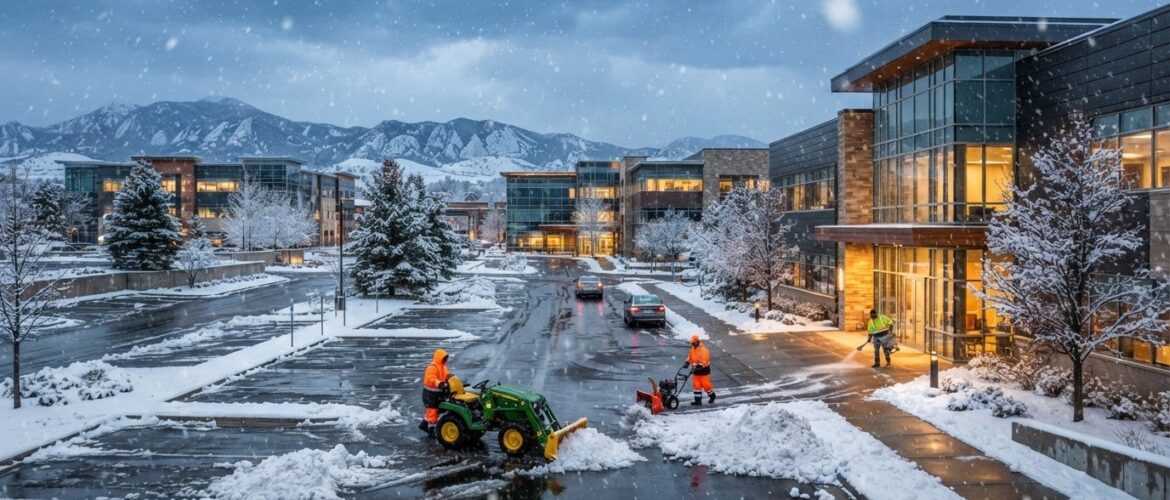
A snow event can disrupt more than a parking lot. Untreated entrances, sidewalks, and access routes can make it harder for customers, employees, and residents to reach a Cherry Creek property. Commercial snow plowing Cherry Creek businesses can rely on starts with a plan for the full site, not just the areas vehicles use.
Property managers need to know who is responding, which areas are covered, and how completed work is recorded. Snow Removal Denver serves commercial properties in Cherry Creek and across Denver County and the surrounding Denver Metro area. Dispatch is staffed 24/7, with crews operating around the clock during snow events and on-call personnel available seven days and nights. Every visit is documented with photos, and commercial ice melt is applied to sidewalks and entrances.
This article explains how snow plowing and ice management can serve retail, office, community, and industrial properties. You’ll learn what storm response involves, how plowing, sidewalk clearing, de-icing, and snow hauling fit into a service plan, and why seasonal contracts run September through May. It also covers how acreage, visits, and de-icing needs shape a commercial estimate, plus what to prepare for an on-site estimate.
Key Takeaways
- See how commercial snow plowing needs vary across office campuses, retail lots, community properties, warehouses, and industrial sites in Cherry Creek.
- Understand how 24/7 staffed dispatch and crews operating around the clock support a coordinated response during snow events.
- Learn how property area, visit needs, sidewalk treatment, snow hauling, and documentation shape a commercial snow plan.
- Find out how the no slip-and-fall liability guarantee combines photo-documented visits with commercial ice melt on sidewalks and entrances.
- Prepare for an on-site commercial estimate by identifying the areas to clear and your property’s plowing and ice-management needs.
Commercial Snow Plowing in Cherry Creek: What Properties Need Covered
Snow can narrow drive lanes, cover parking spaces, and make entrances difficult to reach. For a Cherry Creek business, those conditions can interrupt deliveries, customer visits, employee access, and daily operations. A useful plan looks beyond the main lot: identify the vehicle routes, pedestrian approaches, and building access points the property depends on.
Commercial snow plowing clears and manages snow on a business property’s agreed vehicle routes and paved areas to support access during winter weather. The service scope should reflect how the site is used, where snow can be moved, and which adjacent sidewalks and entrances need attention. Denver Snow Removals provides commercial snow plowing for properties in Cherry Creek and across Denver County and the surrounding Denver Metro area.
Which Cherry Creek commercial properties need snow-plowing coverage?
Coverage can be planned for parking lots, office campuses, retail properties, HOAs, apartment communities, warehouses, and industrial parks. Each site has different circulation needs. A retail lot may depend on open parking aisles and clear customer entrances, while an industrial property may need access maintained to loading areas. Denver Snow Removals uses newer Chevrolet 2500HD trucks equipped with commercial-grade Boss plows, as well as loaders and other heavy equipment, to support commercial snow work.
- Office campuses: Identify connecting drives, parking areas, and entrances used by staff and visitors.
- Retail properties: Prioritize parking circulation and clear approaches to storefronts.
- HOAs and apartment communities: Map shared lots, internal roads, and pedestrian access points.
- Warehouses and industrial parks: Include loading and service routes in the site plan.
These examples help a property manager turn a general request for plowing into a clear site scope. Mark the paved areas and routes on a site map, then note which ones need to remain accessible during a storm. The Snow removal techniques and equipment overview explains common approaches; the right commercial plan still depends on the property’s layout and access needs.
Where do private-property, city, and BID responsibilities meet?
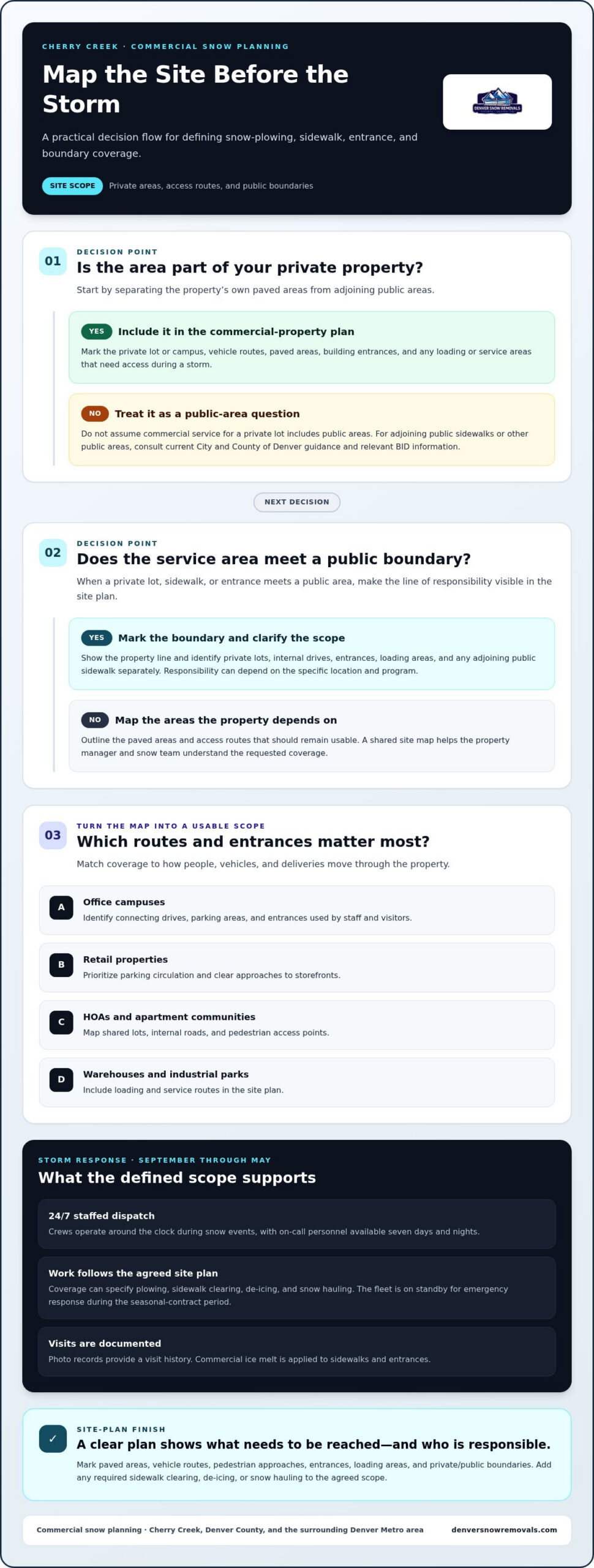
Keep the service boundary clear. A private parking lot or campus needs its own commercial-property plan, separate from work carried out in public areas. Cherry Creek North BID describes district maintenance and supplemental public-right-of-way services. That district work should not be assumed to cover a business’s private lot, internal drives, or building entrances.
Before winter, mark the property line and identify which sidewalks, entrances, and paved areas belong in the commercial service scope. For adjoining public sidewalks or other public areas, consult current City and County of Denver guidance and relevant BID information. Responsibility can depend on the specific location and program, so define private and public areas separately rather than relying on a general assumption about who clears a boundary area.
A simple site map makes the plan easier to understand. Mark private lots, vehicle routes, entrances, loading areas, and any boundary with a public sidewalk. This gives the property manager and snow team a shared view of the coverage required at the site.
How Snow Removal Denver Handles Cherry Creek Storm Response
Storm response depends on more than having plows available. Property managers need a communication point, crews able to work through a snow event, and a record of completed visits. Denver Snow Removals serves commercial properties in Cherry Creek and throughout Denver County and the surrounding Denver Metro region. Seasonal contracts run September through May, and the fleet is on standby for emergency response during that period.
Denver Snow Removals staffs dispatch 24/7 and operates crews around the clock during snow events, with on-call personnel available seven days and nights. This availability supports communication and coordinated commercial snow-plowing and ice-management work during a storm.
What happens when snow begins falling in Cherry Creek?
During the September through May seasonal-contract period, the fleet is on standby for snow events. Dispatch is staffed, crews operate around the clock, teams clear the areas included in the property plan, and visits are documented with photos. The work follows the agreed site scope, including any specified sidewalk clearing, de-icing, or snow hauling.
For property managers, a defined scope makes it easier to understand what crews are expected to address. Identify the paved areas and access routes that need plowing, then list any included sidewalk clearing, de-icing, or snow hauling. Photo records provide a visit history managers can retain with property operations records. The Snow and Ice Management Association (SIMA) standards offer broader industry context for organizing snow and ice management practices.
How does commercial equipment support lot clearing?
Denver Snow Removals uses newer Chevrolet 2500HD trucks fitted with commercial-grade Boss plows. Its equipment also includes skid steers, tractor loaders, front loaders, road graders, Bob-cats, and de-icing equipment. Different machines support different parts of commercial snow work, from plowing paved areas to moving accumulated snow and treating surfaces.
When planning coverage, match the equipment and service scope to the property’s layout. For example, a site with limited snow-storage space may need snow hauling or pile removal in addition to plowing. A property with long pedestrian routes should identify those areas for sidewalk clearing and ice management. Site layout and conditions inform the work performed.
- Trucks and plows support commercial lot clearing.
- Loaders, skid steers, and graders provide equipment options for moving snow and working on larger paved sites.
- De-icing equipment supports ice-management work alongside plowing.
Clear communication, commercial-grade equipment, and photo-documented visits help commercial property teams organize storm response. Managers arranging commercial snow plowing coverage can use the seasonal planning period to define site areas and service needs before winter operations begin.
What to Compare in a Cherry Creek Commercial Snow Plan
A practical snow plan turns a property’s layout and daily operations into a defined service scope. For commercial snow plowing Cherry Creek properties rely on, compare the areas to be cleared, sidewalk and ice-management needs, snow placement, and how work is documented. A site map helps connect each item to the way people and vehicles use the property.
Which coverage details matter for a Cherry Creek property?
Mark parking areas, drive lanes, entrances, sidewalks, loading areas, and possible snow-pile locations. Consider what could become blocked as snow accumulates, including visibility at lot exits or access to busy entrances. If piles may reduce usable parking or interfere with site operations, include snow hauling or snow-pile removal in the service discussion.
| Plan detail | What to consider |
|---|---|
| Property area | Identify lots, drive lanes, entrances, and other paved areas that need coverage. |
| Visit needs | Describe the seasonal coverage the property requires without assuming a visit count. |
| Sidewalk treatment | Include the sidewalks and entrances where clearing or ice management is needed. |
| Snow hauling | Assess whether on-site snow-pile areas will work or hauling is needed. |
| Documentation | Account for photo records that show completed service visits. |
Use this comparison as a planning tool, then define the services and areas required for the property. Denver Snow Removals documents every visit with photos and applies commercial ice melt to sidewalks and entrances. When preparing the site scope, note where snow can be piled, which routes need to stay accessible, and which pedestrian areas need treatment. The Commercial Snow Removal Guide and Ice Management Guide provide additional context for thinking through related service needs.
How do seasonal contracts and per-push service differ?
Seasonal contracts run September through May and are typically cheaper than per-push pricing. A seasonal arrangement covers the contracted period, while per-push pricing is based on individual service visits. Compare the options against your property’s coverage needs and budget, rather than assuming a particular number of visits or services is included.
Commercial pricing depends on acreage, the number of visits during the season, and de-icing needs. A larger paved area, more frequent service, or greater need for ice treatment can affect the estimate. Denver Snow Removals provides free on-site estimates for commercial properties, so the property layout and service needs can inform the price.
Before requesting an estimate, note the areas to be cleared, sidewalks and entrances needing treatment, and whether snow hauling may be relevant. That information gives the commercial plan a clear starting point and helps match coverage to the property’s operations.
Reducing Snow and Ice Risks at Cherry Creek Entrances and Sidewalks
A cleared parking lot doesn’t automatically mean pedestrians have a clear route. Snow can remain on sidewalks and at building entrances, while meltwater may refreeze and leave slick patches. Plowing and ice management need to work together, with pedestrian access included in the commercial property’s winter plan.
How are sidewalks and entrances included in commercial snow management?
Denver Snow Removals provides commercial sidewalk clearing and de-icing alongside snow plowing. People often leave their vehicles and cross sidewalks or entrance areas before reaching a business, office, or community building. A plan focused only on vehicle routes can overlook these final, frequently used parts of the journey.
For commercial snow plowing in Cherry Creek, identify the sidewalks and entrances serving the private site, then include them in the service scope. Cherry Creek North BID programs may address district maintenance and public-right-of-way areas, but that work is distinct from coverage of a private lot or building entrance. Clear boundaries help property managers understand which areas belong in their commercial plan.
Plowing alone may not address ice on pedestrian surfaces. Sidewalk treatment deserves specific attention in the plan rather than being treated as an automatic result of clearing a parking lot. Denver Snow Removals applies commercial ice melt to sidewalks and entrances as part of its documented service approach.
What does documented service mean for property managers?
Every visit is documented with photos, and commercial ice melt is applied to sidewalks and entrances. This creates a record of service activity for property managers to retain and review as part of site operations. Denver Snow Removals states its no slip-and-fall liability guarantee in connection with these two actions: photo documentation at every visit and commercial ice melt application at sidewalks and entrances. This describes the company’s stated commitment, not a promise that every incident can be prevented.
The company is fully insured. Photos and treatment records also give managers concrete details to reference when coordinating property operations during winter weather. A clear service boundary remains essential: identify which sidewalks and entrances on private property are included in the commercial plan, and distinguish them from public areas maintained through separate district or city arrangements.
Before the season, property teams can mark entrances, pedestrian routes, and the boundary between private property and public space on a site plan. That step helps align sidewalk clearing and de-icing with the areas people use most, while keeping responsibilities clear across the site.
For commercial property managers ready to plan sidewalk clearing and ice treatment, request a commercial snow estimate.
Arrange Commercial Snow Plowing for Your Cherry Creek Property
A clear estimate starts with a clear picture of the property. Before arranging commercial snow plowing in Cherry Creek, identify the areas that need service and the access challenges your team wants addressed. Denver Snow Removals provides free on-site estimates for commercial properties, helping shape a plan around the site rather than a generic description of winter coverage.
What information helps prepare a commercial estimate?
Use a site map or property notes to outline the work. Include the property type and acreage, then mark the areas people and vehicles rely on. Note any locations where snow piles could affect parking or access.
- Property and paved areas: Describe the site and acreage, including parking lots and internal drives.
- Access points: Mark building entrances, sidewalks, and important vehicle routes.
- Snow management needs: Describe snow-pile concerns and whether hauling may be relevant.
- Ice treatment: Identify sidewalks and entrances where de-icing is needed.
These details help connect the estimate to the property’s actual use. Commercial rates depend on acreage, visits per season, and de-icing needs. A larger site, a different seasonal visit requirement, or additional ice treatment can shape the estimate. An on-site visit gives the property layout and service needs a practical starting point.
When should Cherry Creek businesses plan seasonal coverage?
Seasonal contracts run September through May. Plan ahead to define the coverage areas and arrange the contract before the season is underway. The contract deadline is before October 1. Clients who sign in July or August receive priority dispatch, so early planning can be an important part of preparing for winter operations.
Clients can also lock 2026-2027 season rates. This option applies to that specified season, not later seasons. For a property manager comparing plans, bring the site details and service needs together early enough to make an informed seasonal decision.
To get started, identify the property areas, describe the plowing and ice-management needs, and arrange a free on-site commercial estimate. Denver Snow Removals can prepare an estimate based on the property’s acreage, seasonal visits, and de-icing needs. Clear planning helps your team approach winter with a defined commercial snow plan.
Set Your Property Up for a More Prepared Winter
A winter plan is easier to put in place before snow reaches your site. Use a property map and operating needs to define the areas that matter, then build coverage around how your business functions through the season. That preparation gives your team a clear starting point for commercial snow plowing Cherry Creek properties can depend on.
Denver Snow Removals is fully insured and has more than 47 years in business. Dispatch is staffed 24/7, and crews operate around the clock during snow events, with on-call personnel available seven days and nights. Each visit is documented with photos, and commercial ice melt is applied to sidewalks and entrances.
Take the next step with a property-specific plan. Request a free on-site commercial estimate for your Cherry Creek property and start winter planning with confidence.
Frequently Asked Questions
Does Denver Snow Removals provide 24/7 commercial snow plowing in Cherry Creek?
Yes. Denver Snow Removals provides commercial snow plowing in Cherry Creek, with dispatch staffed 24/7 and crews operating around the clock during snow events. On-call personnel are available seven days and nights. The fleet is on standby for emergency response during the September through May seasonal-contract period.
What kinds of Cherry Creek commercial properties can receive snow removal?
Commercial snow removal serves non-residential sites such as office campuses, retail parking lots, HOAs, apartment communities, warehouses, and industrial parks. Coverage can address the paved areas and walkways used by tenants, customers, staff, and service vehicles. Denver Snow Removals serves Cherry Creek within Denver County and the surrounding Denver Metro area. A warehouse manager, for example, can identify loading access and parking routes when describing the property’s needs.
How is commercial snow removal priced in Denver?
Commercial snow removal pricing is based on the property’s acreage, the number of visits needed during the season, and de-icing needs. These factors shape a property-specific estimate rather than a single rate for every site. Seasonal contracts run September through May and are typically cheaper than per-push pricing. Sharing a site plan and noting high-use entrances helps clarify which areas and treatments the estimate should account for.
Are Cherry Creek sidewalks cleared by the City, the BID, or the property owner?
Responsibility can vary by the sidewalk segment and whether it’s part of a private property or public area. Cherry Creek North BID describes district maintenance and supplemental public-area services, which are separate from a commercial plan for a private lot or building entrance. For current sidewalk requirements and any deadlines, consult official City and County of Denver guidance and relevant BID information for the specific location.
When should a business arrange a seasonal snow contract?
Arrange seasonal coverage before October 1. Seasonal contracts run from September through May, so early planning gives a business time to define site needs before winter operations are underway. Clients who sign in July or August receive priority dispatch. Identify service areas and ice-management needs before requesting an estimate so the seasonal plan reflects how the property operates during snow events.
Can a commercial property request a free on-site snow-removal estimate?
Yes. Denver Snow Removals offers free on-site estimates for commercial properties. Before the visit, note the acreage, parking and vehicle routes, entrances, sidewalks, and any snow-pile concerns. These details help frame the estimate around the commercial property’s layout and operational needs.
Does commercial snow removal include snow hauling and pile removal?
Denver Snow Removals provides snow hauling and snow-pile removal as commercial services. Whether they’re needed depends on the property’s layout and where plowed snow can be placed without interfering with parking, visibility, or access. Flag areas where piles may become an operational concern, such as near a loading route or entrance, so the estimate can reflect the property’s needs.