
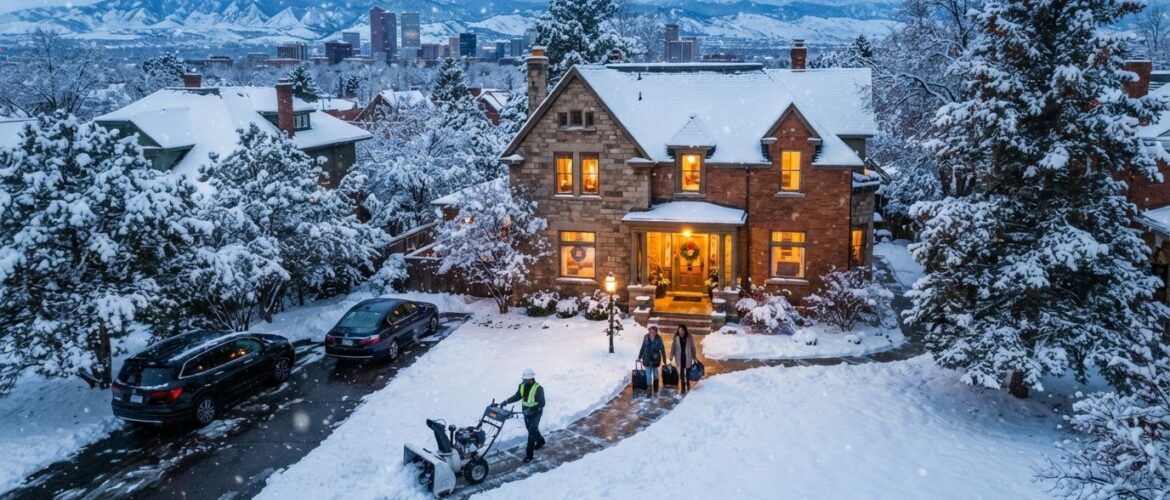
At a Denver bed and breakfast, the biggest snow-removal concern may not be the parking lot. It could be the icy path guests take from their cars to the front door. Snow can disrupt arrivals, parking, and access, while storm timing makes it difficult to coordinate clearing with check-in and staff schedules. Commercial snow removal for bed and breakfasts works best as an arrival-and-access plan, not just a plowed lot.
A useful plan starts with your property layout and guest traffic. It identifies which areas need attention, from parking spaces and carports to walkways and entrances, so staff and guests can move around the property during winter weather.
This guide covers what to consider when choosing commercial snow removal in Denver, how to map priority areas, and how to coordinate service with arrivals and daily operations. You’ll also learn how commercial snow plowing and ice management can address different parts of a property. Snow Removal Denver is a family-owned business with over 44 years of snow removal and plowing experience across the Denver Metro area.
Key Takeaways
- Plan commercial snow removal for bed and breakfasts around how guests move through the property, not just where they park.
- Identify important access routes before a storm, and account for changing snow and refreezing conditions.
- Consider plowing, walkway clearing, and ice management according to each area’s use and winter conditions.
- Prepare a property brief with site details and guest access instructions to support clear coordination.
- Snow Removal Denver’s commercial service and range of equipment can address different areas of an inn.
Commercial snow removal for bed and breakfasts starts with guest access
Fresh snow can make a familiar arrival confusing. Guests may be unsure where to park, whether a carport is accessible, or which path leads to the entrance. Clearing only the main parking area can leave the rest of the route unfinished. Commercial snow removal for bed and breakfasts should account for the full path guests and staff use across the property.
A lodging-focused snow plan coordinates access by prioritizing parking, carports, entrances, and walkways according to how guests and staff use the property. Snow clearing moves accumulated snow from these areas. Ice management addresses slippery conditions that may remain or form on walking and driving surfaces. Neither removes every winter hazard, so route planning and continued attention to changing conditions still matter. Snow Removal Denver’s commercial service covers parking lots, carports, and walkways, with trucks, front-end loaders, and snow blowers for work across different property areas. For background on manual and mechanized snow removal methods, see the overview from Wikipedia.
Which areas should a bed and breakfast prioritize?
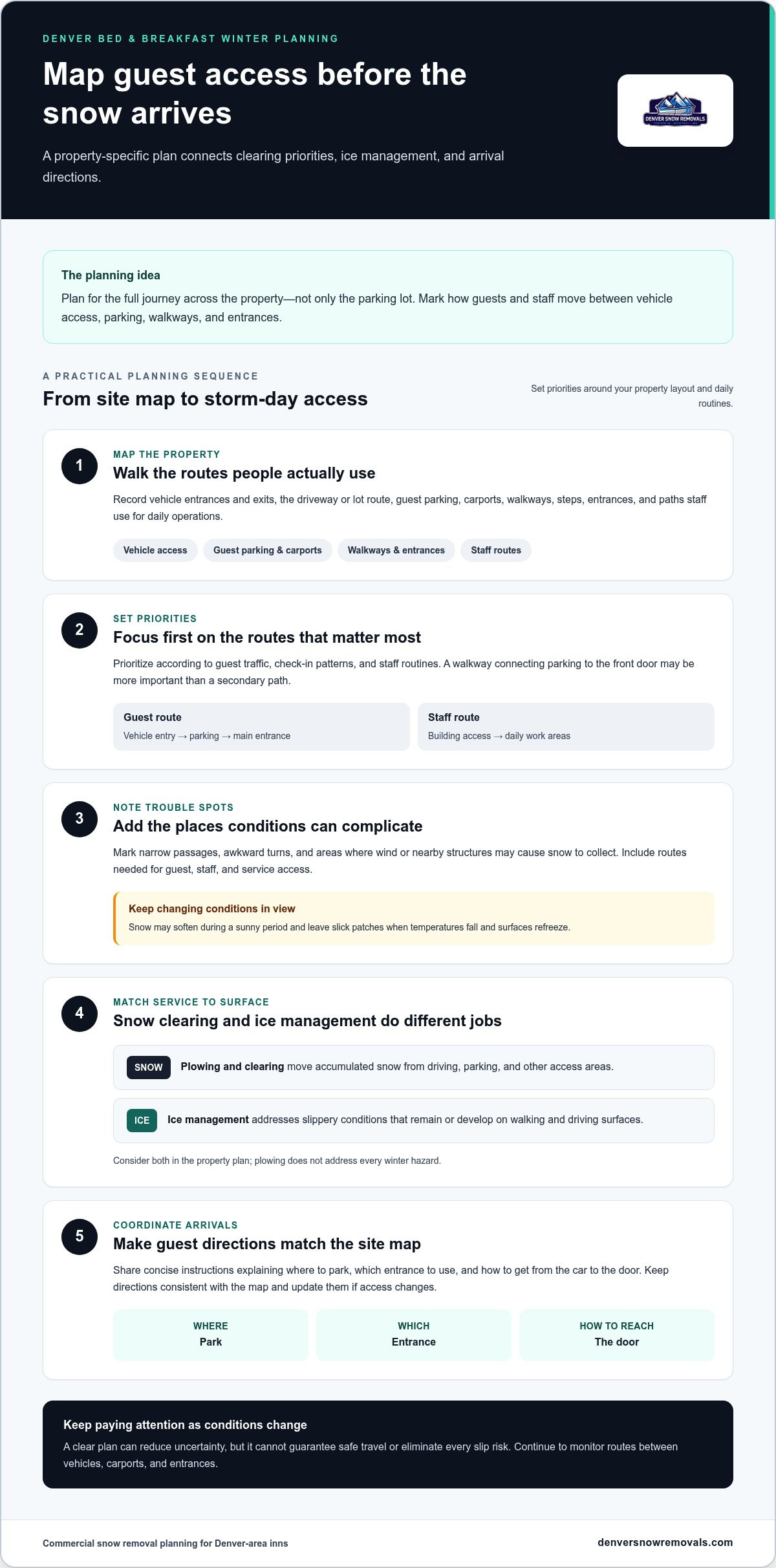
Start with a simple site map. Mark vehicle entrances and exits, guest parking, carports, and the most direct pedestrian route from parking to the main entrance. Add the paths staff use for daily operations and property access. Priorities depend on the layout: a walkway between the parking area and front door may see more guest traffic than a secondary path.
- Vehicle access: Mark the driveway or lot entrance and the route vehicles take to reach parking.
- Guest parking and carports: Identify the spaces guests need to reach and the routes from those spaces to the entrance.
- Pedestrian routes: Note the main walkway, steps, and alternate paths guests or staff regularly use.
- Staff access: Include routes staff need to enter the building and carry out daily tasks.
How does a snow plan support a smoother guest arrival?
A clearly marked route helps guests know where to turn and walk when fresh snow changes the appearance of the property. Before arrival, share concise directions that specify where to park, which entrance to use, and how to get from the car to the door. Keep those instructions consistent with the site map, and update them if access changes.
Set priorities with check-in patterns and staff routines in mind, so the plan reflects when and where access matters most. A clear plan can reduce uncertainty, but it cannot guarantee safe travel or eliminate every slip risk. Continue to pay attention to conditions, especially along routes between vehicles, carports, and entrances.
How Denver snow and ice conditions affect a bed and breakfast plan
Denver-area winter conditions can change after snowfall ends. A sunny period may soften snow on a walkway or driveway, then colder temperatures can leave slick patches as surfaces refreeze. For a bed and breakfast, those conditions can affect the same routes guests use to reach their cars, the entrance, and shared spaces. Planning only for fresh accumulation leaves an important gap.
A property-specific winter plan coordinates snow clearing and ice management around the routes guests and staff need to access and move through the property. Set priorities before a storm, while you can review the layout and consider daily routines. Staff can then follow a clear plan as conditions change, rather than deciding which routes matter after snow has already fallen.
What should managers assess before winter weather arrives?
Walk the property and record its layout, including parking areas, carports, walkways, entrances, and routes used for daily operations. Look for narrow passages, awkward turns, and places where wind or nearby structures may cause snow to collect. Set priorities for guest, staff, and service access based on how the property operates.
- Guest access: Identify the route from vehicle entry and parking to the entrance.
- Staff access: Note the paths needed to enter the building and move between work areas.
- Recurring trouble spots: Mark confined spaces or places where snow tends to gather.
These details connect the storm plan to the property’s actual layout. They also make it less likely that a frequently used route will be overlooked in a general clearing plan.
Why plan for ice as well as accumulated snow?
Snow plowing moves accumulated snow from driving and parking areas. Ice management addresses slippery conditions that may remain or develop on surfaces, including during melt-and-refreeze cycles. The two services address different conditions, so a property plan should consider both rather than assume plowing handles every winter hazard.
Read the Denver commercial ice management guide for more detail. Snow Removal Denver provides commercial snow plowing and ice management in the Denver Metro area. Its Denver commercial snow removal service covers parking lots, carports, and walkways.
Compare commercial snow removal options by property needs
A bed and breakfast may need different snow and ice services across one property. Parking-lot plowing supports vehicle access, walkway clearing focuses on pedestrian routes, and ice management addresses slippery surfaces. Compare needs by area to build a plan around how guests and staff use the site, rather than treating every surface the same way.
| Property area | How it is used | Service need to consider |
|---|---|---|
| Parking lot and vehicle entrance | Guests arrive, park, and drive out | Snow plowing to clear vehicle areas and maintain access through the lot |
| Walkways and entrances | Guests and staff walk between parking, carports, and the building | Walkway clearing, with ice management considered for slippery surfaces |
| Carports and connecting routes | Guests park under cover and continue on foot to the inn | Snow clearing that considers both vehicle space and the pedestrian route to the entrance |
How do plowing, walkway clearing, and ice management differ?
Plowing clears accumulated snow from vehicle areas such as commercial parking lots. Walkway clearing focuses on pedestrian paths, including routes to entrances. Ice management addresses icy surfaces that may remain or form even after snow has been cleared. It complements snow removal, but does not replace it. For commercial snow removal for bed and breakfasts, separating these tasks helps show whether the plan covers the whole guest route, from arrival to the front door.
Which equipment fits different parts of the property?
Equipment needs depend on the area and property layout. Trucks support commercial snow removal across vehicle areas, while front-end loaders can handle substantial snow-clearing work. Snow blowers can be used in more confined spaces where larger equipment may not fit. Snow Removal Denver’s fleet includes all three, providing options for different areas of commercial properties.
Use the property map to match each service need to its location. A lot may call for plowing, while walkways and narrower areas need attention suited to pedestrian access. Consider ice management separately as well. This area-by-area approach helps innkeepers describe the work clearly and identify whether the plan covers parking, carports, and paths to entrances. It avoids assuming one service or piece of equipment can address every area.
Prepare your bed and breakfast for snow removal step by step
A written property brief turns winter planning into clear instructions for staff and snow-removal crews. Prepare it before the next storm and keep it accessible to the people coordinating guest arrivals. For commercial snow removal for bed and breakfasts, specific details such as where guests park and which entrance to use make the plan more useful than a general instruction to “clear the property.”
What information should go into a property snow plan?
Start with a site map and a short written brief. Label guest areas, staff routes, and locations that regularly create access challenges. Keep instructions practical so someone unfamiliar with the property can understand the priorities.
- Property and access: Record the address, vehicle entrances and exits, and access points used by staff or service vehicles.
- Parking and carports: Mark guest parking areas, carports, and the paths connecting them to the building.
- Walkways and entrances: Identify the main guest entrance, alternate entrances, and pedestrian routes.
- Pinch points: Note narrow sections or locations where snow tends to accumulate and could affect access.
- Guest updates: Decide how staff will share revised parking or entrance instructions if conditions change.
Set priorities according to how the inn operates. For example, distinguish the main guest arrival route from a secondary path used mainly by staff. That gives everyone a shared reference without assuming that every part of the property has equal priority.
How can staff coordinate during a winter storm?
Assign one staff contact to communicate property conditions and operational priorities. That person can use the site map to identify an area needing attention and keep updates consistent. Choose a simple way to record updates, such as marking a copy of the map or sharing a written note, and use it throughout the storm.
Keep guest messages brief: state where to park, which entrance to use, and whether the route has changed. Update the instructions when access changes, and make sure staff have the same information before responding to arriving guests. Clear communication helps reduce confusion, though it cannot remove all winter travel or slip risks.
For additional preparation ideas, read the Denver business winter storm preparedness guide. Learn more about how Snow Removal Denver can support a property-specific plan through its commercial snow removal service.
Choose an experienced Denver snow removal partner for your inn
A useful snow-removal plan reflects the property, not just a standard lot-clearing checklist. For an inn, that means considering where guests park, how they reach the entrance, and which areas staff need to access. The service scope should account for those routes and how they connect, making parking and pedestrian access parts of the same winter plan.
What should a lodging operator look for in a snow removal plan?
Use a short checklist to assess how well the plan fits your property. It should account for guest parking, walkways, carports, entrances, and staff routes. Clear communication about site priorities helps staff coordinate if conditions or access change. The equipment should also suit the different areas being cleared, from open vehicle spaces to more confined routes.
- Local service: Choose a provider serving Denver-area commercial properties.
- Relevant coverage: Match the service scope to your parking areas, carports, walkways, and guest entrances.
- Property-specific priorities: Make sure the plan reflects how guests and staff move through your site.
- Suitable equipment: Consider whether trucks, front-end loaders, and snow blowers can address the different areas on your property.
Describe the full guest route and any recurring access challenges, rather than focusing only on the lot. This gives a practical basis for discussing which areas need service. For more guidance on commercial service considerations, read this commercial snow removal guide for Denver businesses.
How does Snow Removal Denver support commercial properties?
Snow Removal Denver provides commercial snow removal across the Denver Metro area, including parking lots, carports, and walkways. Its fleet includes trucks, front-end loaders, and snow blowers for clearing different property areas. The family-owned company brings over 44 years of snow plowing and removal experience to its work.
For commercial snow removal for bed and breakfasts, this local service and range of equipment can support a plan built around an inn’s layout. Share your site priorities, guest access routes, and operational needs when describing the property. A clear plan focuses attention on the areas that matter to guests and staff.
To plan winter access for your inn, request a commercial snow removal estimate from Snow Removal Denver.
Plan winter access with confidence
A useful winter plan considers the whole guest journey, from parking and carports to walkways and entrances. Mapping those areas ahead of time helps you set priorities, coordinate snow clearing with staff, and account for ice management as conditions change. That is the practical foundation of commercial snow removal for bed and breakfasts: a property-specific plan built around guest and staff access.
Snow Removal Denver serves commercial properties across the Denver Metro area. The family-owned business has over 44 years of snow plowing and removal experience, with trucks, front-end loaders, and snow blowers to support work across different property areas. A clear description of your inn’s layout and access priorities helps shape a plan suited to its needs.
Get your property ready for winter with an experienced local team. Request a commercial snow removal estimate and take the next step toward more organized winter access for your guests and staff.
Frequently Asked Questions
What does commercial snow removal for a bed and breakfast include?
Commercial snow removal for a bed and breakfast can include clearing snow from guest parking areas, carports, walkways, and entrances. The right scope depends on the property layout and how guests and staff move through it. Snow plowing addresses accumulated snow in vehicle areas, while walkway clearing focuses on pedestrian routes. A plan can also account for ice management as a separate need across the property.
How do I prepare my bed and breakfast for snow removal?
Prepare a property map and brief before winter weather arrives. Mark vehicle entrances, guest parking, carports, walkways, primary entrances, staff routes, and narrow areas where snow may collect. Set priorities based on how guests and staff use the site. Assign a staff contact to share property conditions and keep guest instructions current if parking or entrance access changes during a storm.
Should a bed and breakfast arrange walkway clearing as well as parking lot plowing?
Yes. Parking lot plowing clears vehicle areas, but guests still need a route from their car or carport to the entrance. Walkway clearing addresses those pedestrian paths and connects the different parts of the arrival route. Consider which paths guests and staff use most, including steps or alternate entrances. Clearing snow can improve access, but it cannot eliminate every winter slip risk.
Does commercial snow removal also address ice?
Snow removal and ice management address different conditions. Plowing and clearing move accumulated snow from parking areas and walkways, while ice management focuses on icy surfaces that may remain or form as conditions change. A bed and breakfast plan should consider both, especially on routes guests use between parking and entrances. Snow Removal Denver provides commercial snow removal and ice management for properties in the Denver Metro area.
What equipment is used for commercial snow removal?
Snow Removal Denver uses trucks, front-end loaders, and snow blowers for commercial snow removal. This equipment supports work across different property areas, from parking lots to carports and walkways. The layout and type of area being cleared help determine which equipment is appropriate for the task. Inn managers can make planning more specific by describing the property’s access points and priority areas.
When should a bed and breakfast plan for commercial snow removal?
Plan before winter weather arrives, while there is time to map the property and set priorities. Identify which parking areas, walkways, carports, and entrances matter most for guest and staff access. Preparing in advance also gives managers time to organize staff responsibilities and guest communications. Review the plan before winter and update it if property access or daily operations change.
How can snow removal reduce disruption for guests?
A clear plan can make arrival easier by identifying where guests should park, which entrance to use, and how to reach it on foot. Share concise directions before arrival and update them if conditions change. Coordinating messages with staff helps everyone provide consistent instructions. Snow removal supports access, but guests may still encounter changing winter conditions, so avoid promising risk-free travel.
Does Snow Removal Denver serve bed and breakfasts in the Denver area?
Yes. Snow Removal Denver serves commercial properties across the Denver Metro area, including bed and breakfasts that need commercial snow removal. Its commercial service covers parking lots, carports, and walkways, supported by trucks, front-end loaders, and snow blowers. Snow Removal Denver is family-owned and has over 44 years of snow plowing and removal experience. A property-specific plan can reflect the inn’s layout and access needs.