

The lowest snow removal quote may leave important work off the bill. For Denver property managers, hidden costs in snow removal contracts can include extra charges for ice management, snow hauling, or repeat service during a prolonged storm. A low price is difficult to compare until you know what’s included, what triggers additional work, and which areas will be cleared.
It’s reasonable to expect a proposal to support your budget and keep parking lots, entrances, and walkways accessible. But vague scope and billing terms can make two quotes look comparable when they cover different services. Before signing, confirm how the provider defines a service event, whether charges can vary, and how the team will communicate during a storm.
This guide explains what to look for in contract exclusions, variable charges, and unclear service terms, including the differences between per-push, per-event, and seasonal agreements. You’ll learn how to compare proposals using the same assumptions and assess a commercial snow removal provider based on scope, safety priorities, and communication.
Key Takeaways
- Compare proposals using the same property map and required service areas to see what each quote covers.
- Look for exclusions, variable charges, and terms for repeat visits or changing service conditions.
- Review seasonal, per-event, and time-and-material agreements, then confirm how each defines billing and service triggers.
- Ask whether trigger depth, dispatch timing, return visits, and communication plans are documented.
- Weigh the full scope and service expectations, not just the initial quote, when choosing a commercial snow removal provider.
Why Denver commercial snow removal quotes can hide different costs
A headline quote can look straightforward while covering only part of the work a Denver commercial property needs. One proposal might include parking lot plowing but exclude walkways or ice management. Another might cover those areas but bill separately for repeat visits or certain storm conditions. Until you compare the scope, service triggers, and billing terms, the totals may not represent the same service.
A hidden contract cost is a charge or obligation that the proposal doesn’t clearly disclose, define, or distinguish from included work. That’s different from a conditional charge stated plainly, with its trigger and calculation explained. The key is to understand what you’re agreeing to before weather puts the terms to the test.
For a neutral overview of snow removal methods and related terminology, see Wikipedia’s summary before reviewing how a proposal describes its services.
For a quick look at how one contractor presents pricing, watch this video. It’s an example, not a statement of Snow Removal Denver’s contract terms.
What counts as a hidden cost in a snow removal contract?
A fee that appears only on an invoice, or an obligation described vaguely enough to cause a surprise later, deserves clarification. By contrast, a proposal may state that extra visits after a specified snowfall or a particular service request are billed separately. That charge isn’t hidden if its conditions and billing method are clear. Ask the provider to identify what’s included, what’s excluded, and which situations could change the bill.
For example, a hypothetical quote could list parking lot plowing but leave ice management out of its scope. Another might disclose a separate charge for repeat visits during continued snowfall. These examples aren’t Snow Removal Denver terms. They illustrate why exclusions and conditional charges should be reviewed separately.
Why Denver properties need a site-specific scope
Properties differ. A lot’s layout, walkways, entrances, access points, and available snow storage areas all affect the work that may be needed. A general description such as “clear the lot” may not explain which sections, pedestrian routes, or entrances are covered. Compare proposals against a property map and ask each provider to identify the areas included.
Storm conditions can expose gaps in vague language. Continued snowfall, drifting, or blocked access may raise questions about when service starts and whether another visit is included. Confirm how the agreement handles those situations. For more context on the work involved, review a commercial snow removal guide, then check that the proposed scope matches your site and access priorities.
Which snow removal contract clauses can change the final bill?
Contract structure affects how charges accrue, but it doesn’t tell you by itself what a full winter will cost. Read the service scope and billing rules together. A seasonal agreement may set a fixed amount for a defined period, while a per-event agreement bills by storm and a per-push agreement bills for each service visit. Time-and-material arrangements typically base charges on the labor, equipment, or materials used, as defined in the contract.
A proposal is comparable only when its service scope and billing triggers match. If one quote covers repeat visits during a storm and another treats each visit as a new charge, the headline totals aren’t an apples-to-apples comparison. The same applies when proposals define a “storm” or a billable visit differently.
How do pricing structures affect a commercial snow contract?
For each structure, ask what starts a charge and how it will appear on an invoice. Check the snowfall threshold for dispatch, how a storm event is defined, whether return visits count separately, and whether minimum charges apply. If the agreement distinguishes service windows, clarify how timing affects billing. For time-and-material billing, ask which labor, equipment, and material units are tracked and how those items are documented. Get the answers in writing.
Which exclusions and add-on services deserve clarification?
Don’t assume a broad phrase like “property plowing” includes every area. Confirm whether the written scope covers:
- Parking areas, walkways, entrances, and carports
- Ice management, including whether applications and materials are billed separately
- Snow hauling or relocation when on-site storage is limited
- Return visits after continued snowfall or changing site access
Also ask who supplies any materials, which materials are included, and whether a separate application charge may apply. A clearly stated extra charge isn’t necessarily a hidden cost. The risk is signing without knowing when it applies or how it’s calculated. For broader guidance on professional service practices, consult the Snow & Ice Management Association’s industry best practices resources.
These details matter when planning access across a commercial property. Snow Removal Denver provides commercial snow plowing and ice management for parking lots, carports, and walkways across the Denver Metro area. Once you’ve mapped your requirements, you can request a commercial snow removal estimate and use the same scope questions to review the proposal.
How Denver weather, site conditions, and service timing affect contract costs
A contract can read clearly during a calm review and still leave questions when conditions change. Snow may continue after an initial clearing, wind can move snow back across cleared areas, and vehicles or other obstructions may limit access. If the agreement doesn’t say what happens next, you may not know whether another visit is included, delayed, or billed separately.
That uncertainty is one source of hidden costs in snow removal contracts. Focus on the terms that connect changing conditions to service: what triggers a visit, how timing is communicated, what counts as a return visit, and how crews handle areas they can’t reach.
What should Denver buyers clarify about snow-event triggers?
Ask the provider to define the snowfall depth or other condition that starts service. Confirm where and when snowfall is measured, and whether the trigger applies once per storm or can apply again during continued snowfall. Then clarify how dispatch timing and follow-up visits work if snow continues or another event begins before the property is fully accessible.
Agree on how updates will be shared as conditions change. A written communication plan helps property managers understand whether service is scheduled, underway, delayed, or subject to a separate charge. Don’t rely on informal assumptions about what “during a storm” or “as needed” means.
How can property layout create scope gaps?
Use a site map to mark parking lots, walkways, entrances, loading areas, carports, and designated snow storage locations. Ask the provider to confirm which areas are included and what happens if the planned storage area fills or becomes inaccessible. For site-planning context, a parking lot snow removal guide can help you identify areas to map before comparing proposals.
Make access conditions explicit, too. If parked vehicles block part of a lot, for example, clarify whether that area will be revisited, excluded from that service, or handled under another billing term. Ask how the provider will report uncleared areas so your team knows what remains to be addressed.
- Identify alternate snow storage locations and who approves a change.
- Define how blocked entrances or walkways are reported and handled.
- Confirm whether a return visit is included or billed separately.
These written details help align the service plan with actual site conditions. They also clarify responsibilities when conditions change, rather than leaving property staff to interpret broad contract language during a storm.
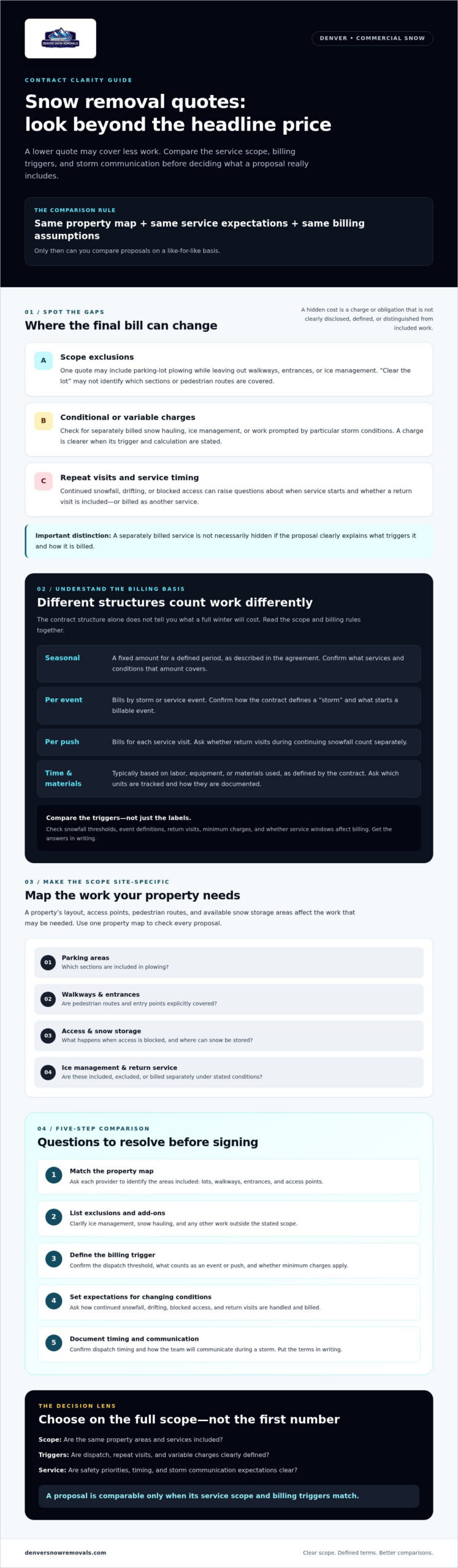
A five-step checklist for comparing commercial snow removal contracts
A structured review helps you compare what each provider will actually do, not just the opening quote. Start with the same property map and service requirements for every proposal. If a term or conditional charge remains unclear, ask for an explanation in writing before signing. This makes it easier to spot hidden costs in snow removal contracts and assess whether the plan supports access across your property.
- Map the service scope. Mark the parking areas, walkways, entrances, carports, and other locations that need attention. Ask the provider to confirm in writing which areas are included and which are outside the proposal.
- Check service triggers. Identify what snowfall depth or event starts service, how it’s measured, and whether continued snowfall or a return visit can create another charge.
- List exclusions. Look for work that may be billed separately, such as ice management or snow hauling. Ask what happens when access is blocked or a planned snow storage area can’t be used.
- Verify billing. Confirm how the contract defines a billable event or visit, which charges are conditional, and how completed work will be documented. Ask who to contact if an invoice doesn’t match the service record.
- Document communication. Clarify how the provider will share service updates, report areas that couldn’t be cleared, and notify you if site conditions change the work plan.
What questions should property managers ask before signing?
Ask directly: What work is included? What’s excluded? Which conditions can lead to additional charges? Who records completed work, and how are billing questions handled? Also review the agreement’s insurance documentation, cancellation language, and renewal terms with the appropriate people at your organization. These are practical review points, not legal advice.
How can you compare proposals fairly?
Create a side-by-side comparison with rows for scope, triggers, exclusions, service timing, billing, and communication. Use the same property map for every provider, and mark each item as included, excluded, conditional, or unclear. A lower initial quote may cover fewer areas or different service conditions, so compare coverage before judging the total.
For additional selection guidance, consult a guide to choosing a snow removal company in Denver and use its evaluation points alongside your written scope. Once your site requirements are organized, request a commercial snow removal estimate to compare against the same checklist.
Choose a Denver snow removal partner with clear expectations
A dependable commercial snow removal partner should be able to explain the proposed scope, billing triggers, exclusions, and communication process before you approve an agreement. Clear answers help you plan for winter operations and support access across your property. Experience and equipment matter, but they don’t replace written terms that fit your site.
A lower initial quote may be a reasonable fit if it covers the work you need. It may also reflect a narrower scope or different service assumptions. Compare the written details rather than treating the lowest headline number as the best value. That’s how you reduce surprises from hidden costs in snow removal contracts and choose a plan that matches your priorities.
What does a dependable commercial snow removal partner make clear?
Look for a proposal that identifies the property areas covered, defines a service-triggering event, lists exclusions, and explains how updates will be shared. Ask specifically how parking lots, carports, and walkways are addressed. If a term could be interpreted in more than one way, request written clarification before approving the agreement. A provider’s willingness to discuss these points helps you judge whether expectations are aligned, without assuming experience alone settles contract questions.
When should you request a property-specific estimate?
Request an estimate when your site has several service areas, complex access points, or limited snow storage options. Share a site plan and mark priority entrances, walkways, parking areas, carports, and preferred snow storage locations. This gives the provider useful context and gives you a clearer basis for reviewing the proposed scope.
Snow Removal Denver is a family-owned provider serving commercial properties across the Denver Metro area, with over 44 years of snow plowing and removal experience. Its commercial service includes clearing snow and ice from parking lots, carports, and walkways, supported by trucks, front-end loaders, and snow blowers. These details describe the company’s experience and services, not specific contract triggers or billing terms. Confirm those directly in the estimate and agreement.
Bring your site plan and questions to the discussion. Request a commercial snow removal estimate to talk through your property’s needs and clarify the proposed scope before making a decision.
Make your next snow removal agreement clear from the start
A reliable commercial snow plan begins with clear expectations. Compare proposals using the same property scope, confirm what triggers service and additional charges, and get unclear terms documented before you sign. These steps help you recognize hidden costs in snow removal contracts without assuming the lowest quote or a particular billing structure is always the best fit.
Snow Removal Denver is a family-owned provider with over 44 years of experience. Its commercial service includes snow and ice clearing for parking lots, carports, and walkways, supported by trucks, front-end loaders, and snow blowers. Share your property’s priorities and ask questions about the proposed scope so you can make an informed comparison.
To discuss your Denver property’s needs, request a commercial snow removal estimate and ask for clarification on the proposed scope.
Frequently Asked Questions
What hidden costs should I look for in a commercial snow removal contract?
Check for charges or obligations that aren’t clearly explained in the proposal. Possible items to ask about include separate billing for ice management, snow hauling, repeat visits, or service under specific conditions. Also check whether walkways, entrances, and carports are included in the stated scope. A charge isn’t necessarily hidden if its trigger and billing method are clear. Ask the provider to explain uncertain terms in writing before you sign.
Can a snow removal contractor charge extra for repeat visits during one storm?
That depends on the agreement’s billing terms. A contract may treat a storm as one service event, or it may define each dispatch or return visit as separately billable. Check how the agreement defines a storm, what happens if snowfall continues after an initial visit, and whether the provider must communicate before doing additional work. Don’t rely on assumptions about what “per event” or “as needed” means. Ask for the exact terms in writing.
How much does a commercial snow removal contract cost in Denver?
There isn’t one reliable price for every Denver commercial property, and Snow Removal Denver’s estimate depends on the property’s needs. Scope, service triggers, billing structure, site access, and whether ice management is requested can affect a proposal. Rather than relying on a general figure, provide the provider with a site plan and a clear list of required areas. Then compare written estimates using the same scope and service assumptions.
What happens if sidewalks or snow hauling are not included in the contract?
If those services aren’t listed in the written scope, don’t assume they’re included in the quoted work. Ask the provider whether they can be added and how the terms would be documented and billed. For sidewalks, identify the specific walkways and entrances your property needs cleared. For snow hauling, clarify what happens if on-site storage is limited. Resolve these questions before approval so responsibilities and expectations are clear.
Is seasonal or per-push pricing better for a commercial property?
Neither structure is automatically better. A seasonal agreement uses a set price for a defined winter period, while per-push billing charges by service visit, according to the agreement. The right fit depends on your budget preferences, expected service needs, and the contract’s scope and billing rules. Compare how each proposal handles snowfall triggers, repeat visits, exclusions, and invoicing. Review the full terms instead of judging by the pricing label alone.
How can I compare two snow removal quotes fairly?
Give each provider the same property map and service requirements. Compare which parking areas, walkways, entrances, and carports are covered, then check trigger definitions, exclusions, timing, repeat-visit terms, and communication procedures. Mark unclear or conditional items and request written clarification. A lower initial quote may cover a narrower scope, so separate differences in service coverage from differences in billing structure before deciding which proposal best fits your Denver property.
Should ice management be included in a commercial snow removal contract?
Include ice management if it’s part of your property’s needs, but confirm exactly what the proposal covers. Ask which areas are addressed, when service may be performed, and whether applications, materials, or additional visits are billed separately. Don’t assume ice treatment is included just because a proposal mentions snow clearing. Snow Removal Denver offers ice management along with commercial snow service in the Denver Metro area. Verify the specific scope and terms in your estimate.