

Commercial snow removal for a typical business property runs $100–$500+ per visit and $1,000–$10,000+ per season, depending on lot size, required services, and how your contract defines the trigger depth. According to industry pricing data, most professionals charge $30–$75 per visit on the residential end, but commercial properties command significantly higher rates due to scale, liability, and service-level requirements. The three variables that move your number the most are square footage, trigger depth (the snowfall threshold that activates service), and whether de-icing and hauling are included.
Here’s a fast-reference snapshot before you read further:
| Pricing model | Typical commercial range | Best for |
|---|---|---|
| Per push/visit | $100–$500+ | Unpredictable storm seasons |
| Seasonal contract | $1,000–$10,000+ | Predictable budgeting |
| Hourly (loader/skid steer) | $100–$200/hr | Large or complex sites |
| Per inch | Varies by depth tier | High-snowfall regions |
- Property size is the baseline. Contractors measure in square feet, acres, or parking spaces.
- Trigger depth determines how often they show up. A zero-tolerance trigger costs more than a 2-inch trigger.
- Add-on services (salt application, snow hauling, roof clearing) are frequently priced separately and can double a base quote.
Pro Tip: Before you call a contractor, measure your total paved area in square feet and identify any zero-tolerance zones (main entrances, fire lanes, ADA paths). That single step cuts your quoting time in half and gets you more accurate bids.
Contact Denversnowremovals for a tailored estimate based on your Denver-area property.
Key Takeaways
Commercial snow removal cost is determined primarily by property size, trigger depth, and included services, with seasonal contracts ranging from $1,000 to $10,000+ and per-event costs from $100 to $500+ for most commercial properties.
| Point | Details |
|---|---|
| Per-event cost range | Commercial properties typically pay $100–$500+ per visit depending on lot size and scope. |
| Seasonal contract range | Seasonal commercial contracts run $1,000–$10,000+ based on property size and service level. |
| Trigger depth is the key variable | Zero-tolerance triggers cost more than 2-inch triggers; split zones by risk level to control cost. |
| Request itemized quotes | Ask every bidder to break out labor, equipment, and materials separately for accurate comparison. |
| Denversnowremovals | Offers free site visits and itemized estimates for Denver commercial properties. |
Table of Contents
- 1. What actually drives commercial snow removal cost?
- 2. Which pricing model fits your property and risk tolerance?
- 3. Rough cost ranges by property size and service level
- 4. How contractors actually calculate a commercial snow removal price
- 5. How to get an accurate, comparable quote
- 6. Contract terms that can quietly increase your cost
- 7. Why trigger depth is the most important number in your contract
- 8. Sample cost scenarios for common commercial properties
- What the numbers don’t tell you about commercial snow pricing
- Denversnowremovals offers free estimates for Denver commercial properties
- Sources
- FAQ
1. What actually drives commercial snow removal cost?
Property size is the starting point, but it rarely tells the whole story. Contractors measure paved area in square feet or acres, count parking spaces, and map linear feet of sidewalk. A 50,000-square-foot lot with a simple rectangular layout prices out very differently from a 50,000-square-foot lot with multiple islands, curb cuts, loading docks, and a sloped entrance ramp.
For a deeper look at how each of these variables translates into a line item, this pricing breakdown covers the regional factors specific to Denver properties.
Site complexity adds cost in ways that are easy to overlook during budgeting:
- Curb lines, raised medians, and parking islands require slower, more precise equipment passes.
- Loading docks and grade changes often need skid steers instead of truck plows, which carry higher hourly rates.
- Sidewalks, ADA ramps, and building entries typically require a separate walk crew or snow blower.
- Roof clearing is priced as a distinct service with its own rate schedule.
Trigger depth and response time are the two contract variables that most directly affect how often a contractor deploys. A zero-tolerance agreement (service begins the moment snow starts accumulating) means the crew may show up multiple times during a single storm. A 2-inch trigger cuts deployment frequency but leaves your lot uncleared longer. Industry guidance from SIMA identifies trigger depth as the single most influential variable in commercial contract pricing.
Materials add a separate cost layer. Rock salt works well above 15°F but loses effectiveness in colder temperatures. Calcium chloride handles temperatures down to around -25°F but costs more per application. Liquid brine pre-treatment reduces the total salt needed. Sand provides traction but requires cleanup. The right product depends on the temperature range your property experiences, and contractors price accordingly.

Labor premiums apply for overnight service, holiday deployments, and multi-day storm events. Supervisory or site-safety staff for high-traffic commercial sites add further to the labor line. Taskrabbit data puts the national average for snow removal labor at around $41 per hour, though commercial work commands higher rates due to scale and SLA requirements.
Logistics extras that often get missed in early budgets: snow stacking space, hauling and relocation when stacking space runs out, disposal fees, and any municipal permits required for hauling. Properties without adequate stacking room should negotiate hauling clauses upfront rather than paying emergency-rate premiums mid-season.
Pro Tip: Ask your contractor to walk your site before quoting. A contractor who has physically seen your loading dock grade, your stacking zones, and your ADA paths will give you a far more accurate bid than one working from a satellite image alone.
2. Which pricing model fits your property and risk tolerance?
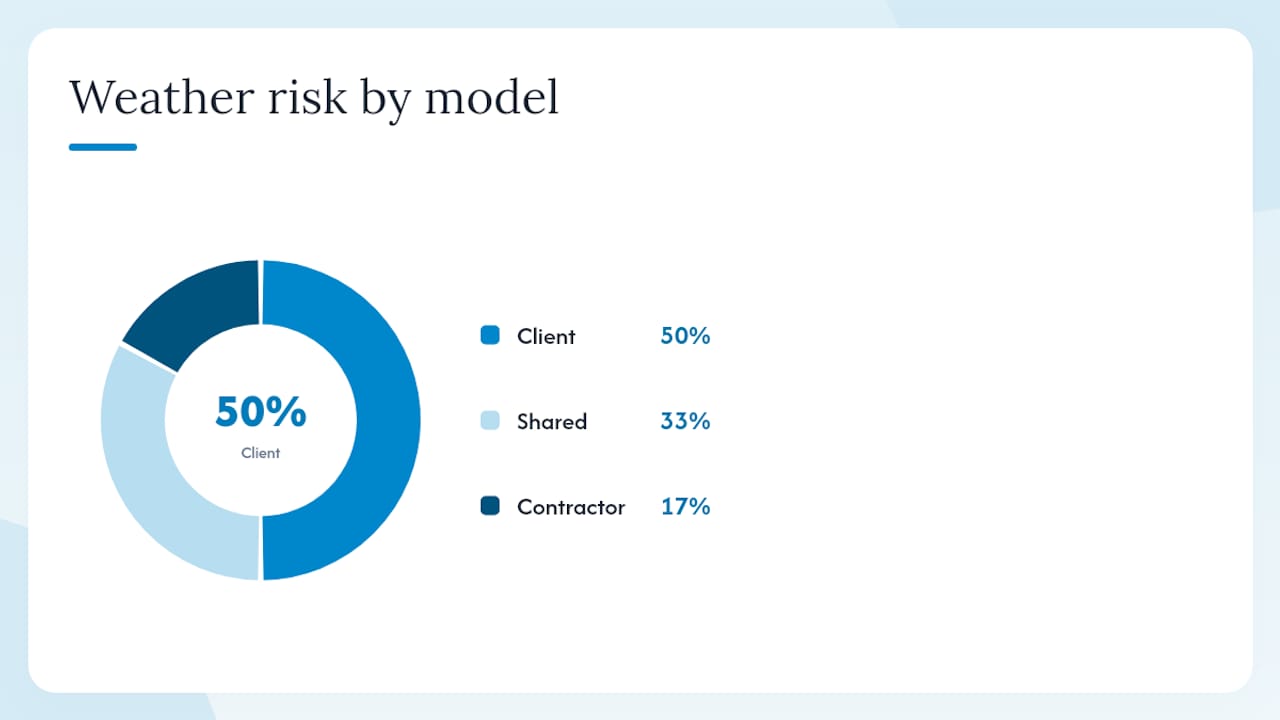
Choosing a pricing model is really a decision about who absorbs the weather risk. SIMA frames it exactly that way: seasonal contracts shift most weather risk to the contractor, while per-event and hybrid models share that risk between both parties.
Per push (per visit): The contractor charges a flat fee each time they plow your lot, regardless of snowfall depth. You pay only when service happens, which is cost-effective in a light snow year. In a heavy season, costs can spike unpredictably. Angi’s pricing data lists this as one of the most common models for commercial properties.
Per event: Similar to per push but covers a single storm from start to finish, even if the crew returns multiple times. Useful for properties that need multiple passes during a long storm without being billed per pass.
Per inch: Pricing scales with snowfall depth, often in tiers (1–3 inches, 3–6 inches, 6+ inches). This model rewards light storms and penalizes heavy ones. It works well in regions with highly variable snowfall.
Hourly (time and materials): The contractor bills for actual time on site plus materials used. Transparent but unpredictable. Best suited for large or complex sites where scope is hard to define in advance, or for one-time emergency service.
Seasonal flat fee: One fixed price covers all snow events for the season, regardless of how many storms occur. Seasonal contracts for commercial properties typically range from $1,000 to $10,000+ depending on size and scope. The contractor absorbs all weather risk; you get a predictable budget line. The trade-off is that in a mild winter, you may overpay.
Hybrid (base fee + overage): A base seasonal fee covers a defined number of pushes or a defined snowfall total. Events beyond that threshold are billed at a per-push or per-inch rate. This model is increasingly common because it balances budget predictability with fair risk sharing. Most established contractors prefer it.
| Model | Weather risk | Best for | Watch for |
|---|---|---|---|
| Per push | Client | Light-snow regions | Budget spikes in heavy seasons |
| Per event | Client | Multi-pass storm sites | Vague “event” definitions |
| Per inch | Shared | Variable snowfall areas | Measurement disputes |
| Hourly | Client | Complex or emergency jobs | Runaway hours |
| Seasonal flat | Contractor | Predictable budgeting | Overpaying in mild winters |
| Hybrid | Shared | Most commercial properties | Overage trigger language |
Pro Tip: For seasonal snow removal pricing, ask the contractor what their historical average push count is for your area. If the seasonal price divided by that average is lower than their per-push rate, the seasonal contract is the better deal.
3. Rough cost ranges by property size and service level
These ranges reflect typical 2026 commercial snow clearing rates across the U.S. market. Denver and the Front Range sit within these bands, though local labor and fuel costs apply.
Per-push estimates by lot size:
- Small retail lot (20–40 spaces, ~15,000–25,000 sq ft): $75–$175 per push
- Medium commercial lot (50–100 spaces, ~35,000–60,000 sq ft): $175–$350 per push
- Large shopping center or office complex (150–300+ spaces): $350–$700+ per push
- Industrial campus or multi-building complex: $500–$1,200+ per push, depending on scope
Commercial properties commonly pay $100–$500+ per visit, with larger facilities and those requiring de-icing or hauling landing at the higher end.
Seasonal contract ranges:
- Small lot (20–40 spaces): $1,200–$3,500 per season
- Medium lot (50–100 spaces): $3,000–$6,500 per season
- Large complex (150–300+ spaces): $6,000–$12,000+ per season
Hourly equipment rates (common add-on or standalone billing):
- Truck with plow: $75–$150/hr
- Skid steer: $100–$175/hr
- Loader: $125–$200/hr
Common add-on costs:
- Salt application: $50–$150 per application (varies by lot size and product)
- Liquid brine pre-treatment: priced per application, often lower than dry salt per event
- Snow hauling: separate rate schedule, typically per load or per hour with a haul truck
- Roof clearing: priced per visit, varies by roof area and pitch
A simple worked example: A 40,000-square-foot parking lot with a 2-inch trigger, one salt application per event, and no hauling requirement. Base per-push rate: roughly $200–$275. Salt application: $75–$100. Total per event: approximately $275–$375. Over a 20-event Denver season, that’s $5,500–$7,500 before any hauling or emergency calls.
Pro Tip: Get bids from at least three contractors using the same site data and the same trigger depth. Ask each bidder to itemize what their number includes.
4. How contractors actually calculate a commercial snow removal price
Understanding the line items behind a quote helps you spot gaps, compare bids accurately, and negotiate from a position of knowledge. Reliable contractor estimating starts with precise site measurement, then layers in labor, equipment, materials, and overhead.
Labor is usually the largest cost component. A typical commercial crew includes one or two equipment operators, a sidewalk crew of one to three people, and a supervisor for larger sites. Overnight and holiday deployments carry shift premiums. Emergency staffing for multi-day storms adds further. The national average for snow removal labor runs around $41 per hour, but commercial SLA requirements push that figure higher.

Equipment costs break into ownership (depreciation, financing) and operating (fuel, maintenance, repairs). A contractor running owned equipment still prices in depreciation. Rental equipment carries a direct cost that shows up in your quote. Equipment drives a significant share of affordable pricing, which is why contractors with well-maintained fleets can often price more competitively than those relying on rentals.
Materials are priced per application or per ton. Rock salt, calcium chloride, and liquid brine each carry different unit costs and temperature effectiveness ranges. A contractor who pre-treats with liquid brine often uses less dry product per event, which can lower your per-event material cost.
Overhead and insurance are real line items. Commercial snow contractors carry general liability insurance, workers’ compensation, and often umbrella coverage. Bonding and permits add to overhead. A contractor who cannot produce a certificate of insurance is not pricing in those costs because they are not carrying that coverage. For more on what snow removal insurance should include, property managers should verify coverage limits before signing.
Storm frequency and historical snowfall data feed directly into seasonal pricing. A contractor in Denver who has tracked 15 years of Front Range storm data prices a seasonal contract differently than one working from a national average. That local knowledge is worth paying for.
A simplified line-item example for a 50,000 sq ft lot, per push:
- Labor (2 operators + 1 walk crew, 2.5 hrs): $180–$240
- Equipment (truck plow + skid steer, 2.5 hrs): $175–$250
- Materials (salt, one application): $80–$120
- Overhead and insurance allocation: $40–$60
- Estimated total per push: $475–$670
Pro Tip: When reviewing a quote, ask the contractor to break out labor, equipment, and materials separately. A single lump-sum number makes it impossible to compare bids or identify where costs are concentrated.
5. How to get an accurate, comparable quote
Apples-to-apples bidding requires you to supply the same site data to every contractor. Inconsistent inputs produce inconsistent bids, and the cheapest number often reflects the narrowest scope.
What to measure and document before you call:
- Total paved area in square feet (parking lot, drives, service lanes separately)
- Number of parking spaces and their layout (rows, islands, angled vs. straight)
- Linear feet of sidewalk, walkways, and ADA paths
- Entrance priorities (main entrance, fire lanes, loading docks)
- Snow stacking zones and their capacity
- Access constraints (low overhangs, underground garages, tight turns)
- Any roof areas requiring clearing
Service level specifications to include in your RFP:
- Trigger depth (zero-tolerance, 1 inch, 2 inches)
- Required response time from trigger (1 hour, 2 hours, 4 hours)
- Number of passes per event
- De-icing product preference or restrictions
- Documentation requirements (service tickets, photo reports, GPS timestamps)
Proof items to request from every bidder:
- Certificate of insurance (general liability and workers’ comp, with your property named as additional insured)
- W-9 for vendor records
- Safety certifications and operator training records
- References from comparable commercial properties
- Sample service ticket or photo report from a prior client
Proper documentation for liability protection is not optional for commercial sites. A slip-and-fall claim without service records is a difficult defense.
Sample questions to ask prospective contractors:
- What is your trigger depth definition and who measures it?
- What is your guaranteed response time after the trigger is reached?
- How do you handle multi-day storms — is each pass billed separately?
- What de-icing products do you use and at what temperatures?
- How is snow hauling priced if stacking space runs out?
- What is your damage repair process for pavement or landscaping?
- Can you provide a certificate of insurance naming us as additional insured?
- How many seasons have you serviced properties of this size?
For a full overview of what a snow removal contract should include, review the key clauses before you sign anything.
6. Contract terms that can quietly increase your cost
The most expensive surprises in commercial snow contracts are almost always in the fine print. These are the clauses worth reading carefully before you sign.
Trigger depth ambiguity is the most common source of disputes. If the contract says “service begins at 2 inches” but does not specify who measures, where, and at what time, you have a gap. A contractor measuring at their depot versus your property entrance can produce very different readings. Insist on a specific measurement protocol.
Response-time SLAs need teeth. A clause that says “reasonable response time” is unenforceable. Commercial sites should specify a maximum response window (typically 2–4 hours for most lots, 1 hour or less for zero-tolerance entrances) and define what happens if the contractor misses it.
Overage and multi-day storm billing is where seasonal contracts can surprise you. If a storm exceeds a defined threshold (say, 6 inches when the contract covers up to 4 inches per event), the overage is often billed at a per-push rate. Make sure the contract defines the threshold and the overage rate explicitly.
Damage liability clauses vary widely. Some contracts limit contractor liability for pavement or landscaping damage; others exclude it entirely. Ask for a clause that requires the contractor to document pre-existing damage before the season starts and to repair any damage caused during service. Asphalt condition matters here: a lot with existing cracks or heaves is more vulnerable to plow damage, and that should be noted in writing before work begins.
Automatic renewals and price escalation clauses are standard in the industry but worth negotiating. Fuel and salt escalation clauses are reasonable; open-ended escalation with no cap is not.
Watch for these red flags before signing any snow removal contract: no certificate of insurance on file, no references from comparable commercial properties, contract language where all services beyond basic plowing are listed as extras with no defined rates, and bids that are significantly below every other quote you received. An unusually low bid almost always means something is missing from the scope.
Pro Tip: Request a sample service ticket from the contractor before you sign. If they cannot produce one, they likely do not have a documentation system. That matters when a slip-and-fall claim arrives months after the season ends.
7. Why trigger depth is the most important number in your contract
Trigger depth is not just a scheduling detail. It is the primary lever that controls both your cost and your liability exposure. SIMA’s industry guidance frames pricing model selection as a weather-risk allocation decision, and trigger depth sits at the center of that decision.
A zero-tolerance agreement means the contractor deploys the moment snow begins accumulating. For a hospital entrance, a pharmacy drive-through, or a high-traffic retail entrance, that level of service is often legally and operationally necessary. The cost premium is real, but so is the liability reduction. Zero-tolerance agreements for high-traffic entrances require pre-treatment and active monitoring, which is why they carry materially higher costs than standard triggers.
A 2-inch trigger is common for general commercial parking lots. It reduces deployment frequency and lowers per-season costs, but it means your lot may have 1–2 inches of packed snow during the early hours of a storm. That trade-off is acceptable for many properties and unacceptable for others.
How trigger depth affects your total seasonal cost:
- Zero-tolerance trigger: highest frequency, highest cost, lowest liability exposure
- 1-inch trigger: moderate frequency, moderate cost, good for mixed-use properties
- 2-inch trigger: lower frequency, lower cost, suitable for lower-traffic lots
- 3-inch trigger: least frequent, lowest cost, appropriate only for low-traffic or secondary lots
Seasonal contracts place weather risk on the contractor, but the trigger depth you specify directly affects how much risk the contractor is absorbing and therefore how they price the seasonal fee. A zero-tolerance seasonal contract costs more than a 2-inch seasonal contract for the same property.
Hybrid models (base fee plus overage billing) are increasingly common precisely because they let both parties share the risk of an unusually heavy season. The base fee covers a defined number of events or a defined snowfall total; anything beyond that is billed at a pre-agreed per-push rate. This structure protects the contractor from a catastrophic season while giving the property manager a predictable floor.
Pro Tip: Split your trigger depth by zone. Negotiate zero-tolerance for main entrances and fire lanes, and a 2-inch trigger for secondary parking areas. This approach controls cost while protecting your highest-liability zones.
8. Sample cost scenarios for common commercial properties
These scenarios translate property size and service scope into estimated cost ranges, useful for early budget conversations with finance teams or HOA boards.
Worked calculation example:
- Property: 40,000 sq ft retail lot, 2-inch trigger, salt included, no hauling
- Base per-push labor and equipment: $220
- Salt application (one per event): $90
- Overhead allocation: $45
- Estimated per-event cost: $355
- Estimated Denver season (18–22 events): $6,390–$7,810
Salt and de-icing add-ons are frequently the line item that surprises property managers most.
- Hauling is priced separately and varies by haul distance and load size.
- Roof clearing is a distinct service; request a separate rate schedule.
- Emergency or after-hours service typically carries a surcharge of 25–50% above standard rates.
What the numbers don’t tell you about commercial snow pricing
There is a version of this conversation that treats snow removal pricing as a pure math problem: measure the lot, pick a model, multiply by storm frequency, and compare bids. That framework is useful, but it misses the variable that causes the most mid-season problems.
The real risk in a commercial snow contract is not the base price. It is the gap between what the contract says and what the property manager assumed it covered. Zero-tolerance language that does not specify a measurement protocol. A seasonal contract that does not define what happens when a storm drops 10 inches instead of 3. A hauling clause that was never negotiated because the property manager assumed stacking space would be sufficient.
Experienced contractors price for the storms they have seen, not the average season. A Denver contractor who has worked through the Front Range’s variable winters prices differently than one using national averages. That local knowledge shows up in how they define trigger language, how they staff for multi-day events, and how they handle the unexpected.
The documentation piece is equally underappreciated. A service ticket with GPS timestamps and photos is not just an administrative nicety. It is your primary defense if a slip-and-fall claim arrives six months after the season ends. Contractors who cannot produce that documentation are not just disorganized; they are a liability risk.
The right question when evaluating bids is not “who is cheapest?” It is “who has the clearest contract language, the most complete documentation system, and the local experience to handle what Denver winters actually deliver?”
Denversnowremovals offers free estimates for Denver commercial properties
Forty-four years of Front Range winters means Denversnowremovals has priced and serviced the full range of commercial properties in the Denver Metro area, from small retail lots to large industrial campuses. The difference for property managers is concrete: itemized quotes that break out labor, equipment, and materials separately; certificates of insurance naming your property as additional insured; service tickets with photo documentation after every visit; and 24/7 availability when a storm does not follow the forecast.
Seasonal contracts, per-event pricing, and hybrid models are all available, with trigger depth and response-time SLAs set to your property’s requirements. For new commercial clients, Denversnowremovals offers a free site visit and a no-obligation itemized estimate. Request your estimate here or call 303-591-2089 to speak with a commercial account specialist today.
Sources
These sources support the pricing data and contract guidance throughout this guide:
- Snow Removal Price Guide 2026: Costs, Rates & Formulas
- Snow Removal Cost: Average Prices Per Visit & Season
- Commercial Snow Removal Contract Estimating Guide
- How Much Does Snow Removal Cost? 2026 Data | Angi
- Snow removal cost: Taskrabbit cost guide
- Snow and Ice Management Association (SIMA)
FAQ
How much does commercial snow removal cost per visit?
Commercial properties typically pay $100–$500+ per visit, depending on lot size, trigger depth, and whether de-icing or sidewalk clearing is included. Larger facilities with loading docks or zero-tolerance requirements land at the higher end.
How do I quote a commercial plowing job?
Measure total paved area in square feet, identify trigger depth and response-time requirements, and itemize labor, equipment, materials, and overhead separately. Reliable estimating also factors in local historical storm frequency to set a fair seasonal price.
How much should I charge to remove snow from a 600 sq ft driveway?
A 600-square-foot residential driveway falls well below commercial scale. Most professionals charge $30–$75 per visit for residential driveways at that size, though rates vary by region and storm depth.
What is a reasonable seasonal snow removal contract cost?
For commercial properties, seasonal contracts typically run $1,000–$10,000+ depending on lot size and service scope. A small retail lot (20–40 spaces) generally falls in the $1,500–$3,500 range; a large complex (150–300+ spaces) can reach $8,000–$14,000 or more.
Are snow removal services worth the cost for commercial properties?
For most commercial properties, professional snow removal reduces slip-and-fall liability, keeps operations running during storms, and often costs less than the legal exposure from a single incident. Hiring a professional service also provides documented proof of service, which is critical for liability defense.
Recommended
- What Determines Snow Removal Service Cost in 2026 – Snow Removal Denver 303-591-2089
- Are Snow Removal Services Worth the Cost? A Homeowner’s Guide – Snow Removal Denver 303-591-2089
- How Equipment Drives Affordable Snow Removal Costs – Snow Removal Denver 303-591-2089
- Commercial Snow Removal Explained for Property Managers – Snow Removal Denver 303-591-2089