

Winter weather preparation demands careful financial planning, particularly for commercial property owners and managers who must maintain safe, accessible facilities throughout harsh winter months. Understanding the snow removal fee structure represents a critical component of this planning process, enabling businesses to budget effectively while ensuring their properties remain operational during severe weather events. The pricing landscape for professional snow and ice management services varies significantly based on multiple factors, from property size and storm frequency to service level agreements and additional treatments. This comprehensive guide explores the nuances of snow removal fees, helping you navigate pricing models and make informed decisions for your commercial property needs.
Understanding Snow Removal Fee Structures
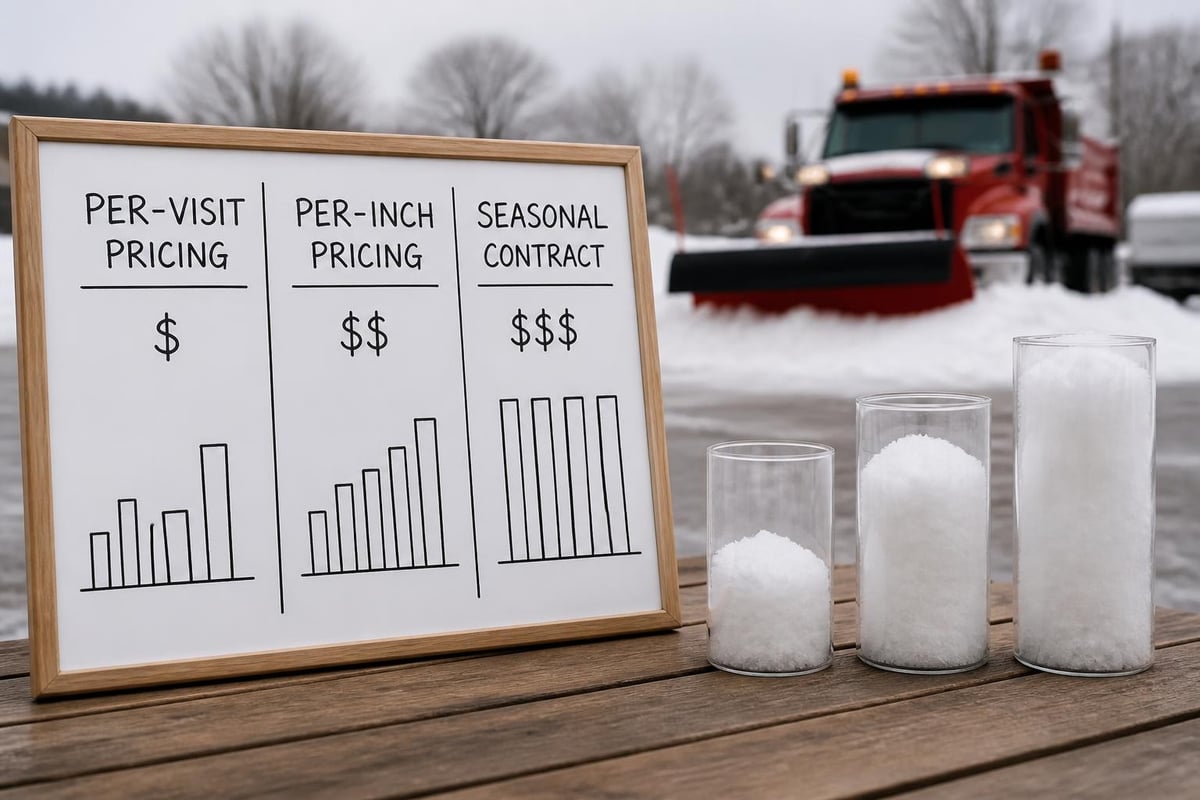
The landscape of snow removal pricing encompasses several distinct models, each designed to address different client needs and risk tolerances. Commercial property owners frequently encounter three primary pricing structures when evaluating service providers for winter weather management.
Per-visit pricing charges a flat rate for each service call, regardless of snowfall accumulation. This model offers straightforward billing but can result in unpredictable seasonal costs during heavy winter seasons. Properties experiencing frequent storms might find this approach expensive, while those in areas with minimal snowfall benefit from paying only when services are rendered.
Per-inch pricing ties the snow removal fee directly to accumulation depth, establishing predetermined rates for specific snowfall ranges. For example, a contractor might charge one rate for 2-4 inches, a higher rate for 4-8 inches, and premium pricing for accumulations exceeding 8 inches. This structure provides some predictability while accounting for the increased labor and equipment costs associated with heavier snowfalls.
Seasonal contracts bundle all winter services into a single fixed price, regardless of storm frequency or accumulation totals. Property managers appreciate the budgeting certainty this model provides, while contractors assume the weather-related risk. According to detailed pricing breakdowns from snow removal experts, seasonal contracts typically range from $400 to $3,000 for residential properties, with commercial properties commanding significantly higher rates based on square footage.
Factors Influencing Your Snow Removal Fee
Multiple variables impact the final snow removal fee quoted by professional contractors. Understanding these elements helps property managers evaluate proposals accurately and negotiate fair pricing.
- Property size and complexity: Larger parking lots, multiple access points, and intricate layouts require more equipment and time
- Surface type: Gravel surfaces demand different techniques than asphalt or concrete, affecting pricing
- Response time requirements: Emergency services and guaranteed response windows command premium rates
- Accumulation triggers: The depth at which plowing begins influences service frequency
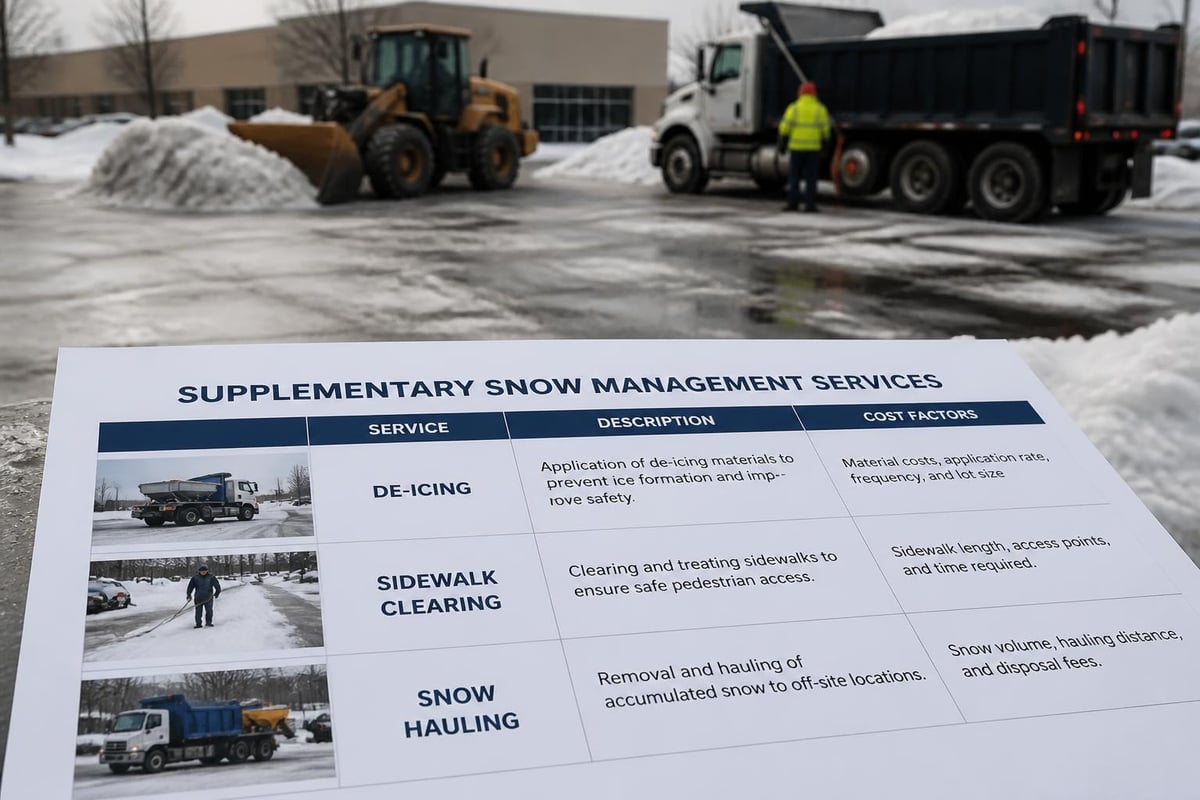
- Additional services: Sidewalk clearing, salting, de-icing, and snow hauling add to base fees
Research from industry cost analysis indicates that property size remains the most significant pricing determinant, with commercial lots typically priced between $75 and $200 per hour for equipment and operator time.
Commercial Snow Removal Fee Considerations
Commercial properties face unique challenges when establishing snow removal fee agreements. Unlike residential driveways, business facilities must maintain liability protection, ensure customer access, and comply with local ordinances regarding snow clearance timelines.
The average commercial snow removal fee varies dramatically based on facility type. Small office buildings with 5,000 square feet of parking might pay $250-$500 per visit, while expansive retail centers or industrial parks with 100,000+ square feet could face fees exceeding $2,000 per storm event. Commercial snow removal pricing specialists emphasize that square footage alone doesn't tell the complete story-accessibility, obstacles, and clearance standards significantly impact final costs.
| Property Type | Typical Size | Per-Visit Fee Range | Seasonal Contract Range |
|---|---|---|---|
| Small Office | 5,000-10,000 sq ft | $250-$500 | $2,000-$4,000 |
| Medium Retail | 25,000-50,000 sq ft | $600-$1,200 | $5,000-$10,000 |
| Large Industrial | 100,000+ sq ft | $1,500-$3,500 | $15,000-$35,000 |
| HOA Community | 15-30 units | $400-$800 | $3,000-$8,000 |
Service Level Agreements and Fee Adjustments
Professional snow removal contracts incorporate service level agreements (SLAs) that define performance expectations and directly influence the snow removal fee. These agreements specify crucial parameters including response times, accumulation triggers, equipment types, and application rates for ice melt products.
A standard SLA might require plowing to begin within two hours of reaching a three-inch accumulation threshold, with all designated areas cleared within four hours of service initiation. More stringent agreements demanding one-hour response times or lower accumulation triggers typically increase fees by 20-40% above baseline rates.
Properties requiring 24/7 emergency snow removal services should expect premium pricing that reflects contractor availability and rapid mobilization capabilities. These enhanced service commitments ensure business continuity during severe weather but represent a significant investment in operational resilience.
Breaking Down Additional Snow Removal Fee Components
Beyond basic plowing services, comprehensive winter property management includes several supplementary treatments that contribute to the total snow removal fee. Understanding these components helps property managers develop complete budgets and avoid surprise charges.
Salt and de-icing applications represent one of the most common additional expenses. Materials alone cost $50-$150 per ton, with application rates depending on surface area and ice severity. A typical commercial parking lot might require 200-500 pounds per application, translating to $25-$75 in material costs before labor charges.
Sidewalk and entrance clearing often appears as a separate line item on invoices. Hand shoveling and smaller equipment use for walkways, entryways, and ADA-compliant pathways typically adds $75-$200 per service visit depending on linear footage and accessibility requirements.
Snow hauling and disposal becomes necessary when accumulated snow exhausts on-site storage capacity. This service commands premium rates, often $80-$150 per truck load, because it requires dump truck equipment, dump site access fees, and additional labor hours. Properties with limited perimeter space or high snowfall accumulation should budget for hauling services when planning their seasonal snow removal fee allocation.
Equipment Costs Reflected in Fee Structures
The significant capital investment required for professional snow removal equipment directly impacts service pricing. Understanding this relationship provides context for the snow removal fee quotes property managers receive.
Modern commercial snow removal operations utilize specialized machinery including:
- Truck-mounted plows ($5,000-$10,000 per unit)
- Skid steers with pushers ($40,000-$75,000)
- Wheel loaders ($75,000-$250,000)
- Salt spreaders ($3,000-$8,000)
- Dump trucks for hauling ($60,000-$150,000)
Contractors must recover these equipment costs through their pricing while accounting for maintenance, insurance, fuel, and depreciation. Pricing strategy experts note that equipment expenses typically represent 35-45% of operational costs for established snow removal companies, directly influencing the fees charged to clients.
Evaluating Snow Removal Fee Proposals
Property managers reviewing snow removal fee proposals should employ systematic evaluation methods to ensure fair pricing and comprehensive service coverage. Simply accepting the lowest bid often leads to service gaps, unexpected charges, or contractor reliability issues.
Key Proposal Elements to Examine
- Detailed scope definition: Verify that proposals clearly identify all surfaces requiring service
- Accumulation triggers: Confirm the snowfall depth that initiates service delivery
- Response time commitments: Establish maximum response windows from trigger conditions
- Equipment specifications: Ensure contractors possess adequate machinery for property size
- Insurance documentation: Verify minimum liability coverage of $2 million for commercial work
- Additional service pricing: Obtain clear rates for salt application, sidewalk clearing, and hauling
According to comprehensive cost guides, property managers should collect at least three detailed proposals to establish market rates for their specific property requirements.
Comparing proposals requires normalizing different pricing structures. A per-visit quote of $400 might seem attractive compared to a $3,500 seasonal contract until historical weather data reveals an average of 12 service calls per winter in your area, resulting in actual per-visit costs of $4,800.
| Pricing Model | Quoted Rate | Estimated Annual Services | Projected Total Cost |
|---|---|---|---|
| Per-Visit | $400/visit | 12 visits | $4,800 |
| Per-Inch | $75 (2-4"), $125 (4-8") | 8 small, 4 large events | $5,100 |
| Seasonal Contract | $3,500/season | Unlimited | $3,500 |
Negotiating Fair Snow Removal Fee Arrangements
Strategic negotiation can significantly impact the final snow removal fee while maintaining service quality and contractor relationships. Property managers possess several leverage points during contract discussions.
Multi-year commitments often yield 10-15% discounts as contractors value predictable revenue streams and reduced marketing costs. A three-year agreement with annual rate adjustments capped at 5% provides budgeting stability while offering contractors business security.
Property proximity clustering benefits both parties when multiple nearby properties contract with the same provider. Reduced travel time between sites allows contractors to offer discounted rates while improving their operational efficiency. HOA communities and office park management companies should explore whether neighboring properties might participate in collective contracting.
Flexible accumulation triggers present another negotiation opportunity. Standard triggers of 2-3 inches might be relaxed to 3-4 inches for properties with lower traffic volumes, reducing service frequency and overall fees by 20-30% in typical winters.
Understanding various pricing models empowers property managers to propose hybrid arrangements that share weather-related risk more equitably. For example, a seasonal cap structure might combine per-visit pricing for the first ten events with a maximum seasonal fee regardless of additional storms, protecting both parties from extreme scenarios.

Regional Variations in Snow Removal Fee Structures
Geographic location substantially influences snow removal fee expectations due to climate patterns, competitive dynamics, and regulatory requirements. Denver metro area pricing differs markedly from Buffalo, Minneapolis, or Boston markets despite similar service delivery.
Denver's moderate snowfall averages of 60 inches annually create different market conditions than lake-effect regions receiving 120+ inches. Local Denver snow plowing services typically structure fees around Colorado's characteristic heavy, wet snow that demands more robust equipment but melts relatively quickly between storms.
Temperature patterns also impact fee structures. Denver's frequent mid-winter warming cycles reduce ice management needs compared to consistently frozen northern markets, potentially lowering chemical application costs by 25-40% over a typical season.
Urban vs. Suburban Fee Dynamics
Metropolitan core properties often face higher snow removal fees due to limited staging areas, stricter noise ordinances, and complicated logistics. A downtown Denver parking structure might pay 30-50% more than an equivalent suburban facility due to:
- Restricted equipment access requiring specialized machinery
- Tight turnaround windows during limited overnight hours
- Premium dump site proximity costs for snow hauling
- Higher contractor insurance requirements in dense urban areas
Property managers operating facilities across urban and suburban locations should expect significant fee variations and evaluate proposals within appropriate market contexts rather than attempting direct cross-location comparisons.
Budgeting for Snow Removal Fee Expenses
Effective financial planning for winter weather management requires understanding both typical costs and potential extreme scenarios. Commercial property managers should develop budgets incorporating historical data, service requirements, and risk tolerance levels.
Historical weather analysis provides the foundation for accurate budgeting. Denver metro area properties should examine the previous 5-10 years of snowfall data, identifying average accumulation totals, storm frequency, and extreme outlier seasons. This analysis reveals whether seasonal contracts or per-event pricing offers better value for specific property locations.
Service requirement assessment translates operational needs into cost projections. Properties requiring comprehensive commercial snow removal with strict uptime requirements should allocate 15-20% more than basic plowing services to accommodate enhanced response times and supplementary treatments.
Creating Contingency Reserves
Financial prudence demands maintaining contingency reserves beyond contracted snow removal fee commitments. Industry best practices suggest allocating an additional 25-35% of projected costs to address:
- Extreme weather events exceeding seasonal contract caps
- Mid-season contract adjustments due to changing property needs
- Emergency repairs to damaged surfaces or infrastructure
- Unexpected regulatory compliance requirements
For a property with a $15,000 seasonal snow removal fee, maintaining a $4,000-$5,000 contingency reserve provides sufficient buffer for most reasonable scenarios while avoiding emergency funding requests during winter operations.
Common Snow Removal Fee Billing Practices
Understanding contractor billing cycles and payment terms helps property managers maintain positive vendor relationships and optimize cash flow during winter months. Snow removal fee invoicing practices vary by contractor size, pricing model, and client segment.
Seasonal contract billing typically employs one of three structures: full payment before winter onset (often discounted 5-10%), quarterly installments, or monthly payments from November through March. The latter option provides the most cash flow flexibility for property managers while ensuring contractor revenue stability.
Per-event billing usually follows service completion with invoices submitted within 48-72 hours. Terms commonly require payment within 15-30 days, though some contractors offer 2-3% early payment discounts for remittance within ten days. Property managers should clarify whether invoices reflect individual service visits or weekly/monthly consolidated statements.
Materials and additional services might appear on separate invoices or consolidated monthly statements depending on contractor accounting systems. Detailed itemization showing salt quantities, application locations, and hauling loads provides transparency and facilitates budget tracking throughout the season.
Payment method preferences vary by contractor, with larger companies accepting credit cards (sometimes with processing fees) while smaller operators might prefer checks or ACH transfers. Establishing automated payment systems for seasonal contracts reduces administrative burden and ensures timely contractor compensation.
Avoiding Hidden Costs in Snow Removal Fee Agreements
Thorough contract review prevents unexpected charges that inflate winter maintenance budgets beyond projected snow removal fee allocations. Several common hidden costs catch property managers unprepared during their first winter under new service agreements.
Minimum service charges might apply even when snowfall barely reaches trigger thresholds. A contract requiring service at three inches might include a minimum fee of $300 even if actual accumulation measures only 3.1 inches, requiring minimal plowing effort. Clarifying minimum charges prevents disputes over seemingly excessive fees for marginal service calls.
After-hours premiums of 25-50% above standard rates often apply to services requested outside normal operating windows or on holidays. Properties requiring guaranteed Sunday or holiday coverage should ensure contracts clearly state applicable rates for premium timing rather than discovering surcharges on invoices.
Material price escalation clauses allow contractors to pass through cost increases for salt, calcium chloride, and other de-icing products during the season. While reasonable given commodity market volatility, these clauses should cap increases at specific percentages or require documentation of wholesale price changes.
According to detailed cost analysis from industry sources, properties that carefully review contracts and obtain clarification on potential additional charges typically experience 15-25% fewer billing disputes than those signing agreements without detailed examination.
Long-Term Value vs. Low Snow Removal Fee Pricing
While controlling costs remains important, property managers must balance snow removal fee considerations against service quality, reliability, and long-term value. The lowest-priced proposal frequently proves most expensive over time when accounting for performance failures, property damage, and liability exposure.
Contractor reliability directly impacts business operations and customer satisfaction. A provider offering fees 20% below market rates but failing to respond promptly during critical morning commute periods creates costs far exceeding the savings through lost productivity, customer complaints, and potential slip-and-fall liability.
Equipment quality and maintenance separates professional operators from marginal providers. Contractors maintaining late-model equipment, backup machinery, and comprehensive preventive maintenance programs command higher fees but deliver superior reliability when winter storms strike. Property managers should verify equipment age, backup availability, and maintenance protocols during contractor evaluation.
Insurance and liability protection represents another area where lowest-cost providers often cut corners. Ensuring contractors maintain minimum $2 million general liability coverage, workers compensation insurance, and proper equipment bonding protects property owners from catastrophic financial exposure should accidents occur during service delivery.
Calculating Total Cost of Service
Comprehensive cost analysis extends beyond the base snow removal fee to include:
- Property damage risk: Inadequate equipment or inexperienced operators cause pavement damage, landscape destruction, and lighting/signage impacts
- Liability exposure: Insufficient insurance coverage transfers accident costs to property owners
- Management time: Unreliable contractors require constant monitoring, complaint resolution, and backup service coordination
- Opportunity costs: Poor snow clearance reduces customer access, employee productivity, and revenue generation
| Cost Factor | Budget Provider | Premium Provider | Net Difference |
|---|---|---|---|
| Base Fee | $12,000 | $15,000 | -$3,000 |
| Property Damage | $2,500 | $500 | +$2,000 |
| Management Time | 40 hours @ $75 | 10 hours @ $75 | +$2,250 |
| Lost Revenue | $5,000 | $1,000 | +$4,000 |
| Total Cost | $19,500 | $16,500 | +$3,000 savings |
This analysis reveals that the premium provider's higher snow removal fee actually delivers $3,000 in total cost savings when accounting for all factors affecting winter operations.
Understanding snow removal fee structures, evaluation criteria, and negotiation strategies empowers property managers to make informed decisions that balance cost control with operational excellence. Whether you operate a small office complex or manage extensive commercial facilities across the Denver metro area, Denver Snow Removals brings 47 years of experience delivering reliable, professional winter weather management. Contact our team today to discuss customized service packages and transparent pricing designed to keep your property safe, accessible, and operational throughout Colorado's winter season.