
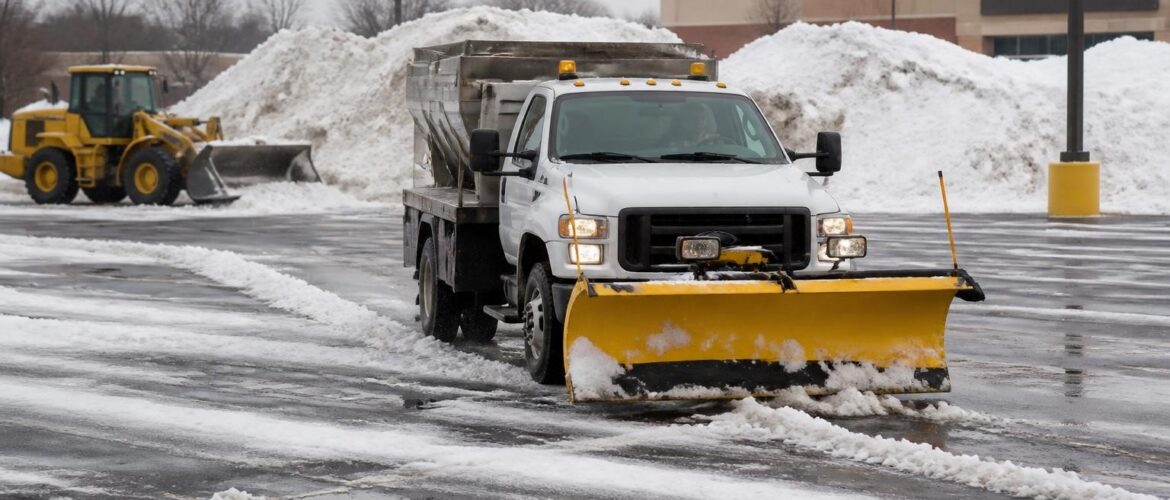
Managing parking lot snow effectively is one of the most critical responsibilities for commercial property owners and facility managers in regions that experience winter weather. The accumulation of snow and ice on parking surfaces creates safety hazards, limits accessibility, reduces operational capacity, and exposes businesses to significant liability risks. Professional snow management requires strategic planning, specialized equipment, trained personnel, and a comprehensive understanding of best practices that balance safety, efficiency, and environmental responsibility. For commercial properties throughout the Denver Metro area and similar snow-prone regions, developing a proactive approach to parking lot snow management is essential for maintaining business continuity during winter months.
Understanding the Impact of Parking Lot Snow Accumulation
Snow accumulation in commercial parking areas creates multifaceted challenges that extend far beyond simple inconvenience. When parking lot snow remains unaddressed, it transforms into compacted ice layers that become increasingly difficult to remove and pose serious slip-and-fall hazards for customers, employees, and visitors.
The financial implications of inadequate snow management are substantial. Property owners face potential litigation from slip-and-fall accidents, reduced customer traffic as patrons avoid icy parking areas, and decreased parking capacity when snow piles consume valuable spaces. According to industry data, businesses can lose significant revenue during winter storms when parking facilities become inaccessible or unsafe.
Property Liability and Risk Management
Commercial property owners maintain a legal duty to provide reasonably safe conditions for invitees and customers. This obligation extends to timely removal of parking lot snow and ice within a reasonable timeframe following winter weather events. Failure to adequately clear parking surfaces can result in premises liability claims that expose businesses to substantial financial damages.
Key liability considerations include:
- Documentation of snow removal efforts and timing
- Establishment of clear protocols for emergency response
- Proper signage warning of potentially hazardous conditions
- Regular inspection schedules during active weather events
- Professional contracts that clearly define service levels and response times
Many commercial property managers work with legal counsel to develop comprehensive snow management policies that demonstrate reasonable care and establish defensible protocols. These policies should align with industry standards and incorporate guidance from professional organizations that specialize in smart snow removal practices for parking garages and open-air facilities.
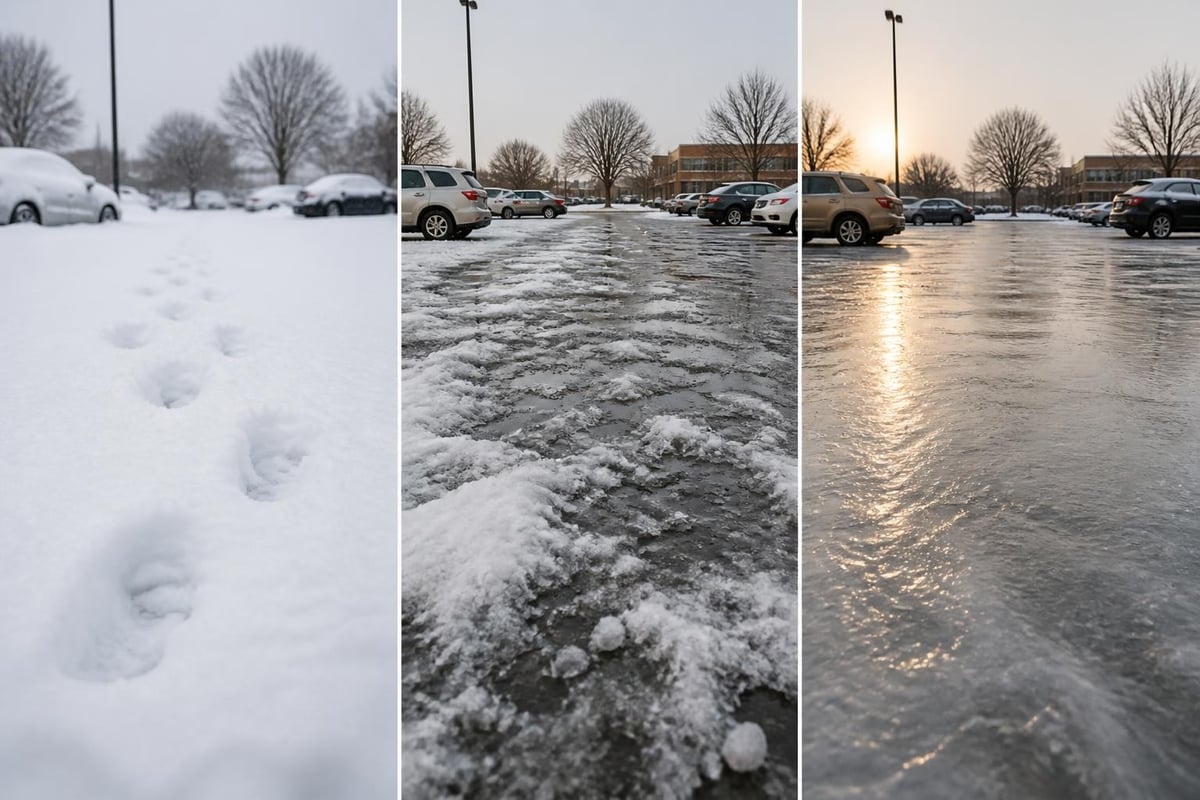
Strategic Planning for Winter Parking Lot Management
Effective parking lot snow management begins months before the first snowflake falls. Professional facility managers develop comprehensive winter operations plans that address equipment readiness, personnel training, material procurement, and stakeholder communication protocols.
Pre-season planning should include detailed site assessments that identify drainage patterns, problem areas prone to ice formation, optimal snow storage locations, and priority zones requiring immediate attention during weather events. Properties with unique features such as underground heating systems, permeable pavement, or environmental impact mitigation designs require specialized approaches that account for these considerations.
Equipment and Resource Allocation
Commercial parking lot snow removal demands industrial-grade equipment capable of handling large surface areas efficiently. The equipment fleet should include plow trucks of various sizes, skid steers with pusher attachments, snow blowers for confined areas, and spreader units for de-icing materials.
| Equipment Type | Primary Application | Typical Coverage Rate |
|---|---|---|
| Truck-mounted plows | Large open areas | 2-4 acres per hour |
| Loader with pusher | Perimeter clearing, stacking | 1-2 acres per hour |
| Skid steer with bucket | Tight spaces, loading | 0.5-1 acre per hour |
| Tow-behind spreader | De-icing application | 5-10 acres per hour |
Equipment maintenance represents a critical component of winter readiness. All machinery should undergo thorough pre-season inspections, preventive maintenance, and operational testing. Backup equipment availability ensures continuity when primary units experience mechanical failures during critical weather events.
Property owners managing multiple locations across regions like the Denver Metro area often partner with established contractors who maintain extensive equipment inventories and can respond to emergency snow removal situations with appropriate resources.
Operational Protocols for Active Weather Events
When winter storms approach, parking lot snow management transitions from planning to execution. Professional operations teams follow structured protocols that prioritize safety, maintain clear communication channels, and ensure systematic coverage of all designated areas.
Trigger points establish when snow removal operations commence. Most commercial properties initiate plowing when accumulation reaches two inches, though some high-traffic facilities begin at one inch or implement continuous clearing during heavy snowfall. These thresholds should be clearly defined in service agreements and operational procedures.
Systematic Clearing Approaches
Professional snow removal follows methodical patterns that maximize efficiency and ensure complete coverage. Operators typically work from perimeter to center, pushing parking lot snow toward designated storage areas that don't obstruct traffic flow, building entrances, or fire lanes.
Priority zone sequencing includes:
- Emergency access routes and fire lanes
- Main entrance approaches and drop-off zones
- Handicapped accessible spaces and pathways
- Primary parking aisles and high-traffic sections
- Secondary parking areas and overflow zones
- Perimeter sections and snow storage locations
During active snowfall, continuous monitoring allows teams to adjust operations based on accumulation rates and changing conditions. Heavy, wet snow requires different techniques compared to light, powdery accumulations. Operators must recognize these distinctions and adapt their approach accordingly, as outlined in best practices for dealing with heavy snow on parking lots.
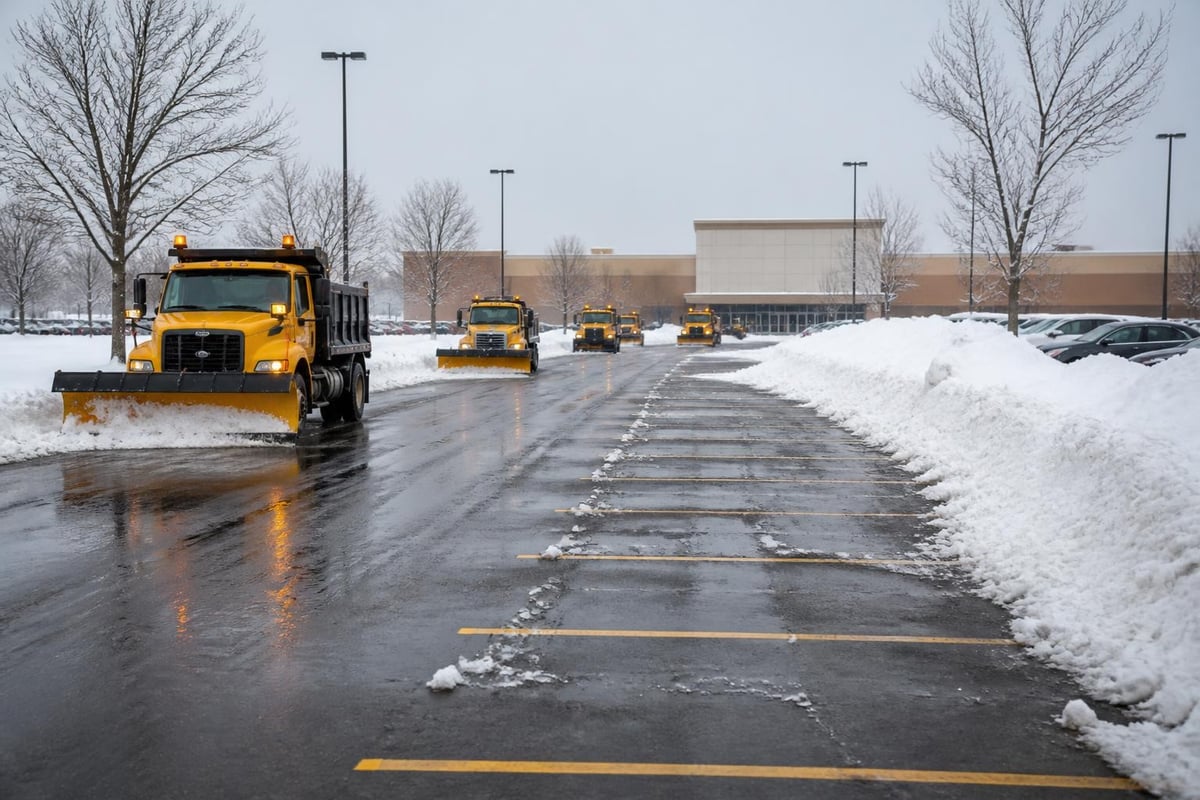
The choice between various snow plowing and snow blowing methods depends on site-specific factors including lot configuration, snow storage availability, and accumulation characteristics.
De-icing Strategies and Material Management
Removing accumulated parking lot snow represents only one component of comprehensive winter management. Ice control through strategic application of de-icing materials prevents dangerous surface conditions and extends the effectiveness of mechanical clearing operations.
Material selection balances performance characteristics, environmental impact, cost considerations, and temperature effectiveness. Traditional rock salt (sodium chloride) remains the most economical option but loses effectiveness below fifteen degrees Fahrenheit and poses environmental concerns for groundwater and vegetation.
Alternative De-icing Materials
Modern parking lot snow management increasingly incorporates alternative materials that offer enhanced performance or reduced environmental impact. Calcium chloride works at lower temperatures and generates less corrosive byproducts, while magnesium chloride provides effective melting with lower application rates.
| Material | Effective Temperature | Corrosion Level | Relative Cost | Environmental Impact |
|---|---|---|---|---|
| Sodium Chloride | 15°F and above | High | Low | Moderate to High |
| Calcium Chloride | -25°F and above | Moderate | Medium | Moderate |
| Magnesium Chloride | -13°F and above | Low | Medium-High | Low to Moderate |
| Potassium Chloride | 25°F and above | Very Low | High | Low |
Pre-treatment strategies involve applying liquid de-icing solutions before snow arrives, preventing bonding between pavement and accumulation. This approach reduces the total material required and simplifies subsequent mechanical removal. Property managers should evaluate whether pre-treatment protocols align with their operational requirements and budget parameters.
Application rates must be carefully calibrated to provide adequate coverage without excessive material use. Over-application wastes resources, increases costs, accelerates concrete deterioration, and intensifies environmental impacts. Professional operators use calibrated spreaders and follow manufacturer recommendations adjusted for specific temperature and moisture conditions.
Snow Storage and Relocation Challenges
As winter progresses and storms accumulate, parking lot snow removed from active areas must be relocated to designated storage locations. Inadequate storage planning quickly consumes parking capacity and creates operational bottlenecks that limit a facility's ability to accommodate subsequent weather events.
Site assessments should identify appropriate snow storage zones that remain accessible throughout winter, don't interfere with drainage systems, avoid blocking sight lines at intersections, and comply with local stormwater management regulations. Many municipalities prohibit pushing snow into streets, waterways, or onto adjacent properties.
Long-term Accumulation Management
Properties experiencing frequent storms or limited storage space may require snow hauling services that physically remove accumulated material from the site. This operation involves loading parking lot snow into dump trucks and transporting it to approved disposal locations, typically city-designated snow farms or areas where spring melt won't cause flooding or contamination issues.
Snow hauling represents a significant expense but becomes necessary when storage areas reach capacity. The cost typically ranges from fifty to one hundred fifty dollars per truck load depending on transportation distance and disposal fees. Property managers should budget for this contingency when developing winter operations plans.
Strategic stacking techniques maximize storage capacity by creating compact, vertical piles rather than sprawling berms. Professional operators use loaders to systematically stack material, creating organized piles that minimize footprint while maintaining stability. Proper stacking prevents dangerous overhangs and ensures snow melts in controlled patterns as temperatures rise.
For property managers overseeing facilities with diverse winter challenges, implementing seasonal snow preparation steps establishes foundational readiness that translates to smoother operations throughout winter months.
Multi-Property Management Considerations
Organizations managing multiple commercial properties face unique complexities in coordinating parking lot snow removal across distributed locations. Centralized oversight ensures consistent service levels, efficient resource allocation, and standardized communication protocols.
Portfolio managers benefit from technology platforms that provide real-time visibility into conditions across all properties, track contractor performance metrics, and facilitate rapid response to emerging issues. Many property management software solutions now integrate weather monitoring, service verification through GPS tracking and photo documentation, and automated reporting capabilities.
Property management platforms like Rentably offer centralized tools for coordinating maintenance operations across multiple properties, though these systems are typically designed for residential applications and may require customization for commercial snow management workflows.
Contractor Coordination and Performance Monitoring
Multi-location operations often employ multiple contractors serving different geographic zones. Establishing clear performance standards, service level agreements, and verification protocols ensures accountability and consistent quality regardless of which vendor performs the work.
Essential contractor management elements include:
- Standardized scope of work definitions across all locations
- Clearly defined trigger points and response time requirements
- GPS-enabled equipment tracking for service verification
- Photographic documentation before, during, and after operations
- Regular performance reviews with quantitative metrics
- Contingency plans for contractor non-performance scenarios
Technology-enabled monitoring provides objective data that eliminates disputes regarding service delivery. Time-stamped GPS tracking confirms when equipment arrived on-site and how long operations continued, while geotagged photographs document conditions and completed work.

Environmental Responsibility in Snow Management
Modern parking lot snow management increasingly incorporates environmental stewardship principles that minimize ecological impacts while maintaining safety and operational effectiveness. Responsible practices address stormwater quality, chloride loading in watersheds, and vegetation health in surrounding landscapes.
Excessive de-icing material application contributes to elevated chloride concentrations in groundwater and surface waters, harming aquatic ecosystems and contaminating drinking water sources. Many municipalities now regulate winter salt usage and require commercial properties to implement chloride reduction strategies.
Sustainable Winter Operations
Best management practices for environmentally responsible snow removal include calibrating spreader equipment to ensure accurate application rates, using pre-wetting techniques that reduce total material requirements, and selecting materials with lower environmental persistence. Some forward-thinking organizations invest in pavement heating systems or permeable pavement designs that reduce reliance on chemical de-icers.
Snow storage location selection should account for spring melt patterns and prevent contaminated runoff from entering storm drains, wetlands, or sensitive habitat areas. Properties can implement vegetated buffers, retention basins, or infiltration systems that filter meltwater before it reaches receiving waters.
Organizations committed to sustainability often pursue certification through environmental management programs or participate in voluntary initiatives such as smart salting partnerships that provide training, equipment calibration services, and recognition for chloride reduction achievements. These programs demonstrate corporate environmental responsibility while potentially reducing material costs and environmental liability exposure.
Commercial properties with ongoing roofing and building envelope projects should coordinate with contractors like Texcore Construction to ensure proper drainage systems and prevent ice dam formation that complicates parking lot snow management in adjacent areas.
Specialized Applications and Unique Challenges
Certain commercial properties present unique parking lot snow management challenges that require specialized approaches beyond standard plowing and de-icing operations. These applications demand enhanced expertise, specialized equipment, and customized protocols.
Parking structures and garages require particular attention to structural loading, drainage systems, and interior climate conditions. Snow and ice melt creates standing water that can refreeze in shaded areas, while accumulated weight on elevated decks may approach design load limits during extreme events. Professional guidance on smart snow removal practices for parking garages helps facility managers navigate these complexities.
Healthcare and Critical Infrastructure Sites
Healthcare facilities, emergency services facilities, and other critical infrastructure locations require zero-failure snow removal operations. These properties cannot afford access disruptions and typically maintain premium service agreements with guaranteed response times and dedicated equipment assignments.
Properties serving high-end clientele such as luxury accommodations like Seesaws Lodge in Vermont's mountain regions prioritize aesthetic considerations alongside functionality, requiring meticulous attention to detail and minimal visual impact from snow storage operations.
Industrial facilities and construction sites often involve coordination with specialized workforce providers like CDR General Services who supply personnel for various operational requirements. Snow management in these environments must account for heavy equipment traffic, material staging areas, and worker safety zones that differ from typical commercial parking applications.
Transportation hubs, distribution centers, and logistics facilities operate around-the-clock schedules that demand continuous snow clearing without operational shutdowns. These properties typically implement zone-based clearing that maintains portions of the lot in service while others undergo active snow removal.
Training and Safety Protocols
Professional parking lot snow removal requires skilled operators who understand equipment capabilities, recognize site-specific hazards, and follow established safety protocols. Comprehensive training programs reduce accidents, prevent property damage, and improve operational efficiency.
Operator certification should address equipment operation techniques, site-specific procedures, communication protocols, and emergency response procedures. Many professional contractors maintain year-round training programs that ensure crews remain proficient and new operators receive thorough preparation before winter operations commence.
Workplace Safety in Winter Operations
Snow removal operations expose workers to numerous hazards including equipment-related injuries, cold stress conditions, visibility limitations during active storms, and fatigue from extended shifts. Robust safety programs address these risks through proper personal protective equipment requirements, shift rotation policies, buddy system protocols, and continuous monitoring of weather and operational conditions.
Communication systems must function reliably in winter conditions, ensuring operators maintain contact with dispatch coordinators and can request assistance during emergencies. Many operations now employ mobile applications, two-way radios, and GPS tracking that provide both operational coordination and safety monitoring capabilities.
Regular safety meetings, pre-shift briefings, and post-operation debriefs create opportunities to identify emerging hazards, reinforce safe practices, and recognize exemplary performance. Documentation of these activities demonstrates organizational commitment to worker safety and provides valuable records in the event of incidents.
Economic Considerations and Budget Planning
Parking lot snow management represents a significant operational expense for commercial properties in winter climates. Effective budget planning requires understanding cost drivers, negotiating favorable service agreements, and balancing service levels against financial constraints.
Service pricing structures vary considerably based on contract type, property size, seasonal snow totals, and competitive market conditions. Common arrangements include per-push pricing, seasonal contracts with unlimited service, hourly rates, and hybrid models combining fixed seasonal fees with overage provisions.
Cost Control Strategies
Property managers can optimize winter operations budgets through several approaches. Competitive bidding processes ensure market-rate pricing, while multi-year agreements often secure favorable rates in exchange for contractor certainty. Some organizations self-perform basic operations with in-house crews and contract specialized services only for major events or equipment-intensive activities.
Budget optimization tactics include:
- Accurate historical data tracking to inform seasonal projections
- Strategic material purchasing during off-season when prices decline
- Equipment sharing arrangements across multiple properties
- Performance-based contracts that align contractor incentives with outcomes
- Investment in infrastructure improvements that reduce ongoing operational costs
Properties throughout regions served by established contractors like Denver Snow Removals benefit from competitive market dynamics and can leverage long-standing relationships to negotiate favorable terms while ensuring reliable service delivery.
Technology investments in monitoring systems, automated dispensing equipment, and predictive analytics platforms require upfront capital but often generate positive returns through reduced material consumption, improved efficiency, and enhanced documentation capabilities that minimize liability exposure.
Effective parking lot snow management demands comprehensive planning, professional execution, and ongoing attention to safety, environmental responsibility, and operational efficiency. Commercial property owners who invest in robust winter operations programs protect their assets, maintain business continuity, and provide safe environments for customers and employees throughout challenging winter conditions. With over 47 years of specialized experience clearing commercial parking lots, industrial parks, and office campuses throughout the Denver Metro area, Denver Snow Removals delivers the expertise and 24/7 emergency response capabilities that property managers need to navigate winter successfully.