
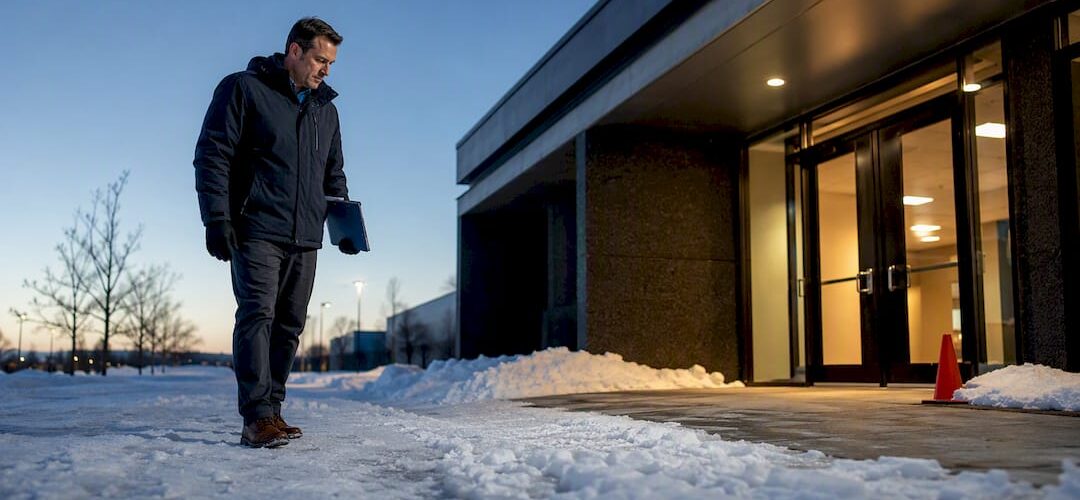
The moment a Denver snow alert goes out, your priority is simple: lock in a local, insured contractor who covers parking areas, sidewalks, and ADA ramps, applies de-icer on schedule, and documents every visit with time stamps and photos. Get bids now, verify insurance before you sign anything, and confirm response times in writing. One established local option worth including in that bid list is a local snow removal company.
TL;DR:
- Respond within guaranteed timeframes for plowing and sidewalk clearance, and verify crew size and equipment capacity before signing a contract.
- Specify de-icing method, application rate, and re-freeze checks to prevent black ice and accommodate Denver’s freeze-thaw cycles.
- Ensure the contract explicitly covers sidewalk and ADA ramp clearing within four to 24 hours of snow, or face potential fines and liability issues.
- Request proof of insurance, documented visit logs, and references from local clients to confirm accountability and proper safety practices.
- Choose seasonal contracts for predictable service and cost, or opt for per-storm billing if light snowfall is expected, but understand the trade-offs.
Table of Contents
- What Do Professional Snow-Plowing Services Actually Include?
- How Do You Evaluate and Choose a Snow Removal Contractor?
- What Are Denver’s Sidewalk and ADA Ramp Rules?
- What Safety Standards Should Your Contract Require?
- What Should Your Contract Scope Actually Say?
- Denver Snow Removal: Matching Your Checklist to a Local Provider
- Where Denver Property Managers Get This Wrong
- Sources
- FAQ
What Do Professional Snow-Plowing Services Actually Include?
A complete Denver snow removal contract covers more than pushing snow off pavement. Most professional scopes include:
- Lot and drive-lane plowing triggered at a set accumulation depth, often a low snowfall accumulation threshold.
- Sidewalk and walkway clearing, including ADA ramps and building entrances.
- De-icing and anti-icing using liquid brine or granular rock salt, applied before and after a storm.
- Snow hauling when piles block parking, fire lanes, or loading docks.
- 24/7 emergency dispatch for multi-day or overnight events.
Roof snow removal and specialty elevated access are almost never bundled into a standard plowing contract. Ask directly whether your bid excludes them. The material matters too: liquid de-icer works faster in Denver’s freeze-thaw swings, while rock salt is cheaper but slower to activate below about 15°F. A contractor who skips re-freeze checks after the initial pass is leaving your property exposed to black ice the next morning.
How Do You Evaluate and Choose a Snow Removal Contractor?
Bids that look similar on paper often hide big gaps in coverage, staffing, and accountability. Work through this checklist before signing anything:
- Response time and staffing. Ask for a guaranteed response window after snow stops falling, not after it starts, and confirm the crew size covering your property specifically.
- Equipment on hand. Confirm the contractor owns or has committed access to plows, skid steers, and spreaders sized for your lot, not just a truck with a blade.
- Insurance certificates. Request proof of general liability, commercial auto, and workers’ compensation coverage before the first storm, not after an incident.
- Safety and training practices. Ask how crews handle winter weather hazards like slick surfaces and powered equipment, and whether drivers have a winter-driving protocol.
- Documentation standards. Confirm the contractor logs time-stamped visits, photographs treated areas, and records materials applied.
- References and local experience. Ask for two or three current Denver-area clients with properties similar in size to yours.
Pro Tip: Request a copy of last season’s visit log from a reference client. A contractor with nothing to show you after a full winter probably isn’t tracking anything at all.
Seasonal contracts and emergency-only calls suit different risk tolerances. A seasonal contract locks in priority service and predictable budgeting. An emergency-only arrangement can cost less in a light winter but leaves you competing for crews during a major storm, exactly when you need them most.
What Are Denver’s Sidewalk and ADA Ramp Rules?
Denver places the legal burden for sidewalk snow squarely on property owners, not the city. City and County of Denver rules require:
- Businesses to begin clearing sidewalks and adjacent ADA ramps as soon as snow stops, with four hours to comply once an inspector issues notice.
- Residential properties to clear by the next day, with 24 hours to comply after notice.
- Non-compliance risking a re-check and a fine, commonly $150, if the sidewalk still blocks pedestrian or wheelchair access.
The city’s sidewalk FAQ confirms this obligation and points residents who need help toward the volunteer Snow Angels program. DOTI plows main arterials and handles limited residential street passes, but it does not touch your sidewalk or your ramp. If a walkway stays icy longer than it should, 3-1-1 is the city’s reporting channel. Build sidewalk and ADA ramp coverage into your contract explicitly. A cleared parking lot with an ice-glazed entrance ramp still exposes you to a fine and a fall claim.
What Safety Standards Should Your Contract Require?
Snow removal carries real injury risk, and the contract you sign should reflect that. OSHA’s snow removal hazard guidance identifies falls, equipment-related injuries, and cardiac strain from shoveling as leading causes of harm on winter jobsites. Before you sign, require proof of:
- Fall protection plans for any elevated work, since OSHA’s rooftop snow-removal hazard alert treats roof access as a separate, specialized scope, not an add-on to ground-level plowing.
- Worker training and PPE for cold exposure, slippery surfaces, and powered equipment operation.
- Traffic and pedestrian controls during active plowing, including where snow piles get placed so they don’t block sightlines or drainage.
- Equipment safety checks before each shift, particularly for skid steers and spreaders working near parked cars and building entrances.
A contractor who can’t answer how they handle fall protection or pile placement is a liability, not a partner, once a claim gets filed.
What Should Your Contract Scope Actually Say?
Denver’s freeze-thaw cycles punish vague contract language, so specificity protects both sides. Build your scope around these line items:
- Pricing model. Choose between a seasonal flat fee (Denver’s typical window runs September through May), per-storm billing, or emergency hourly rates. Seasonal pricing smooths your budget; per-storm or hourly pricing can spike hard during a heavy multi-day event.
- Trigger depth and pass count. State the exact snowfall depth that starts service and how many plow passes are included per visit.
- Sidewalk and ADA ramp coverage. Name it separately from lot plowing so it can’t be quietly dropped from the invoice.
- De-icer type and application rate. Specify liquid or granular product and whether re-freeze checks are included after the first treatment.
- Snow-hauling terms. Define when piles get hauled off-site versus pushed to a designated corner.
- Response window and documentation. Require a written guarantee, time-stamped visit logs, and photo evidence for every service.
- Contract protections. Confirm insurance minimums, indemnity language, a termination clause for non-performance, and a mapped no-pile zone for entrances and fire lanes.
Denver Snow Removal: Matching Your Checklist to a Local Provider
A local snow removal company has operated in the metro area for many years, running a dedicated 24/7 team with equipment sized for everything from residential driveways to full commercial lots. That combination of longevity and standing crew capacity is exactly what the checklist above asks you to verify in any bid.
The company offers free estimates and seasonal plans, so you can request a quote without upfront cost. When you request a walk-through, bring a simple property map marking entrances, ADA ramps, fire lanes, and where you want snow piled. That single document turns a generic quote into an accurate one and gives you something to hold the contractor to later. Services span residential driveway and walkway clearing, commercial parking lot plowing, sidewalk de-icing, snow hauling, and skid steer push and pile work for larger sites. If your property needs a documented, responsive plan before the next Denver snow alert hits, request a free estimate and ask for the visit-logging and photo documentation built into every service call.
Where Denver Property Managers Get This Wrong
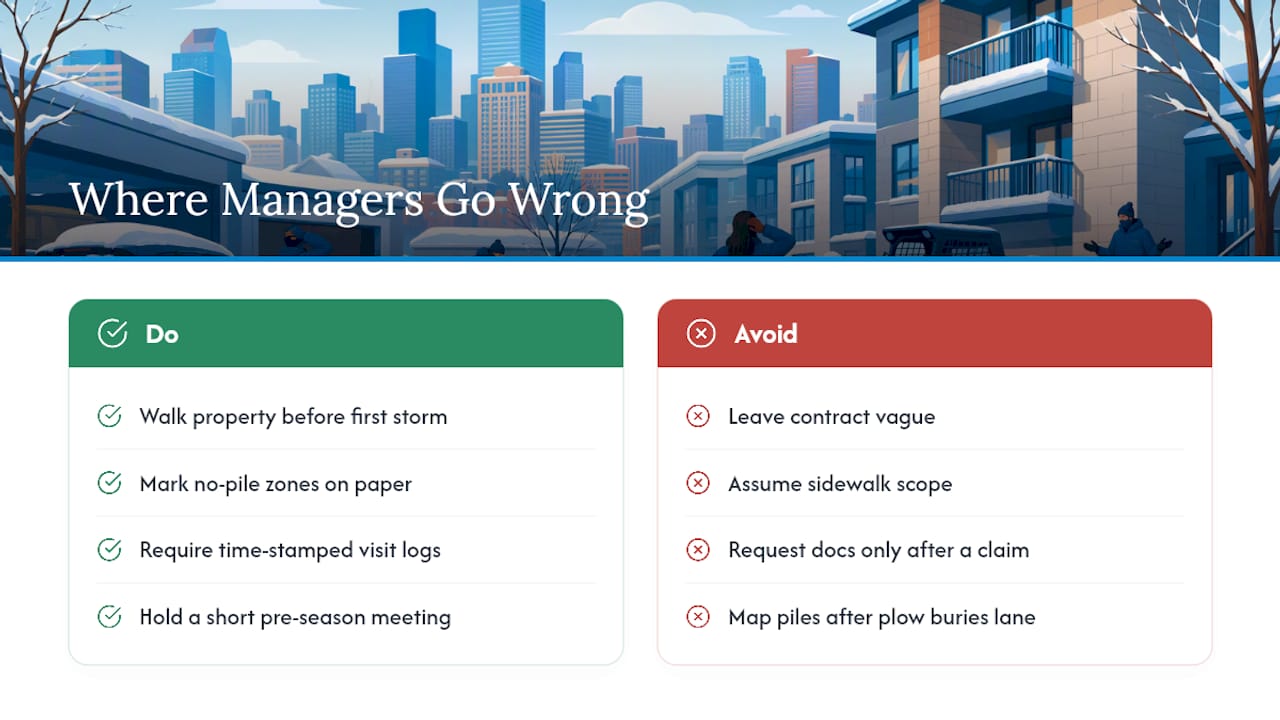
The recurring mistake isn’t hiring a bad contractor. It’s leaving the contract vague. Sidewalk scope gets assumed instead of written down, documentation never gets requested until after a fall claim, and nobody maps where snow piles should go until a plow buries a fire lane.
The fixes are quick: walk the property with your contractor before the first storm, mark no-pile zones on paper, and make time-stamped visit logs a contract requirement, not a courtesy. A short pre-season meeting solves problems that a mid-January phone call never will. Pair that with a seasonal preparation checklist and you’ve closed most of the gaps that turn a routine snowstorm into a liability event.
— Jesse
Sources
FAQ
Does a standard plowing contract include roof snow removal?
No. Roof snow removal is a separate, specialized scope requiring its own fall protection plan, per OSHA’s rooftop hazard alert. Confirm exclusions in writing before assuming your ground-level contractor covers it.
What happens if my sidewalk isn’t cleared in time in Denver?
Denver inspectors issue a time-stamped notice, giving businesses four hours and residences 24 hours to clear the walkway and ADA ramp before a re-check. Non-compliance can result in a fine, commonly $150, according to the city’s snow removal program.
What documentation should I require from a snow removal contractor?
Ask for time-stamped visit logs, photos of serviced areas, and a record of which de-icer was applied and where. This documentation protects you during tenant disputes or slip-and-fall claims.
How much does snow removal cost in Denver?
Pricing depends on property size, service frequency, and whether you choose a seasonal contract or per-storm billing. Denver Snow Removal offers free estimates, so getting an exact number for your property costs nothing upfront.
Should I sign a seasonal contract or pay per storm?
A seasonal contract, typically running September through May, locks in guaranteed priority service and predictable costs. Per-storm or emergency billing can save money in a light winter but risks longer wait times when every property owner needs a crew at once.