
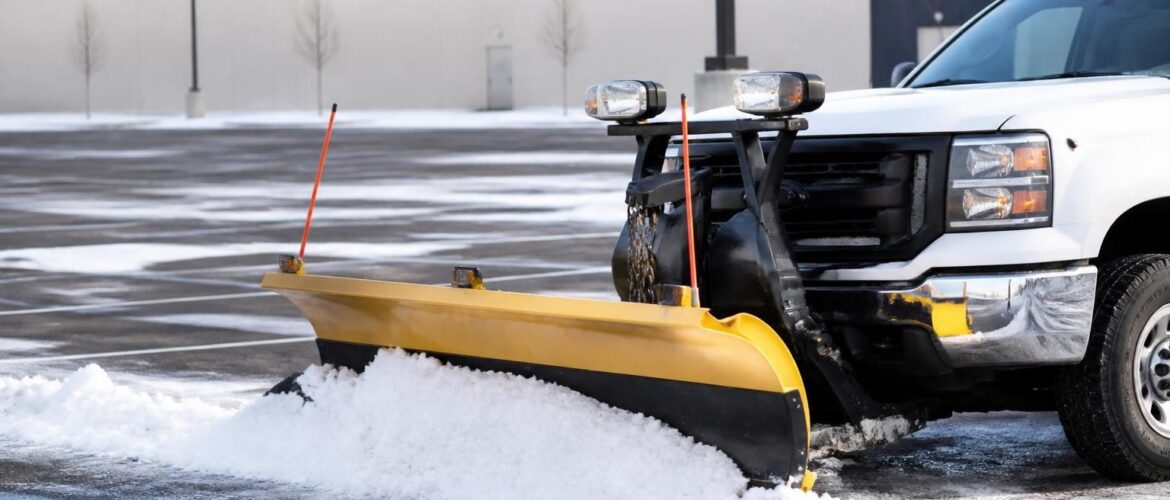
Understanding snow plow cost is essential for property managers, facility directors, and business owners planning their winter operations budget. Whether you're considering purchasing equipment for in-house snow removal or evaluating the investment required for a commercial snow removal operation, the total cost involves multiple factors beyond the initial purchase price. From blade selection and mounting systems to installation labor and ongoing maintenance, each component contributes to your overall investment in reliable winter property management.
Initial Equipment Purchase Costs
The baseline snow plow cost starts with the equipment itself, which varies significantly based on plow type, size, and intended use. Commercial-grade plows designed for clearing large parking lots and industrial facilities represent a substantial investment compared to residential models.
Light-Duty Versus Heavy-Duty Systems
Light-duty plows suitable for small parking areas typically range from $3,000 to $6,500, while heavy-duty commercial systems designed for extensive lot clearing can exceed $12,000 to $18,000 for the plow assembly alone. The price difference reflects engineering standards, durability requirements, and snow capacity.
Key factors affecting equipment costs include:
- Blade width (7 feet to 10 feet for commercial applications)
- Blade material (steel versus polyethylene)
- Hydraulic system complexity
- Trip edge versus full-trip design
- Brand reputation and warranty coverage
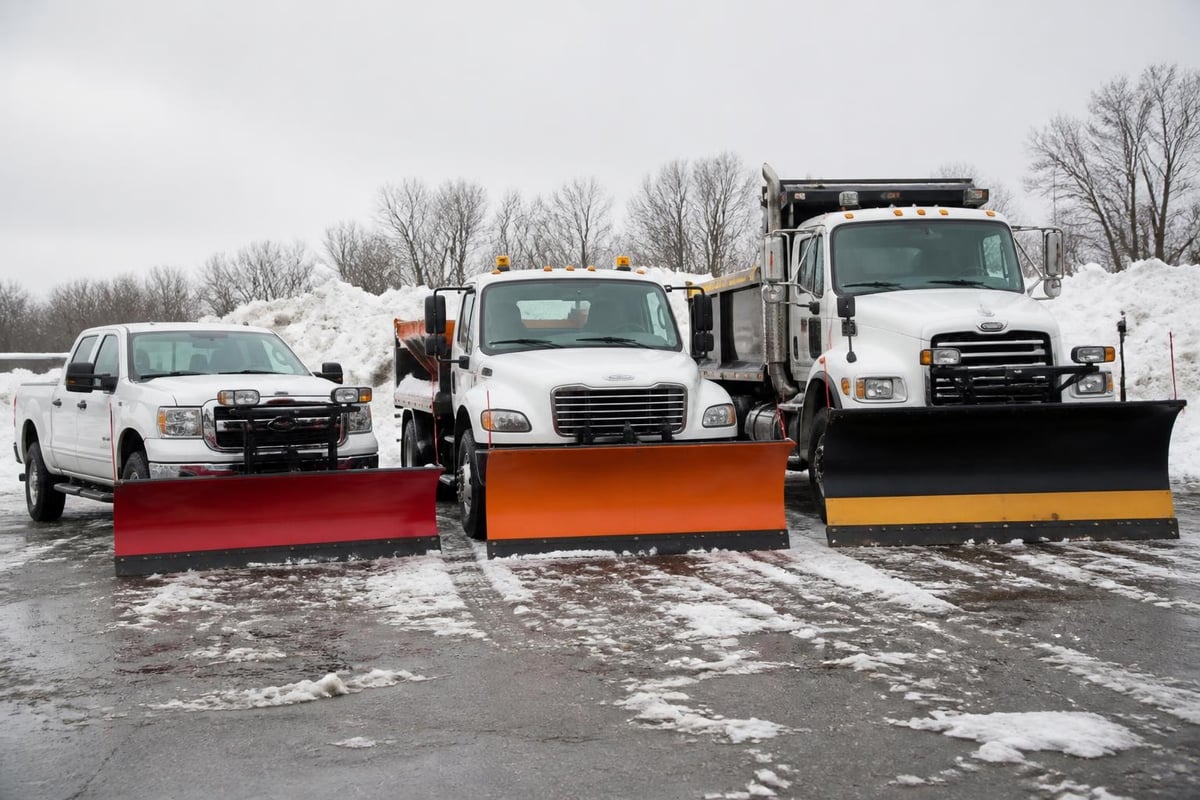
Professional operations serving multiple commercial properties often maintain a fleet of plows matched to different truck sizes and property requirements. This diversification ensures operational redundancy and appropriate equipment deployment for each job site.
Specialized Commercial Features
Commercial snow removal operations require plows with features that residential models lack. V-plows, which can angle into a V-shape for cutting through deep snow or spread wide for pushing, command premium pricing between $8,000 and $15,000. Expandable wing plows that extend blade width for faster clearing on large properties can cost $10,000 to $20,000 or more.
The total cost of owning a snow plow extends beyond the initial purchase, encompassing installation, vehicle modifications, and seasonal preparation expenses that commercial operators must factor into their budgets.
| Plow Type | Price Range | Best Application | Typical Blade Width |
|---|---|---|---|
| Straight Blade | $3,000 – $8,000 | Standard lots, driveways | 7 – 8 feet |
| V-Plow | $8,000 – $15,000 | Heavy snow, large areas | 8 – 9.5 feet |
| Expandable Wing | $10,000 – $20,000 | Parking lots, campuses | 8 – 11 feet (extended) |
| Pusher Box | $4,000 – $12,000 | Loader attachment | 10 – 14 feet |
Installation and Setup Expenses
Beyond equipment acquisition, snow plow cost includes professional installation, which ensures proper mounting, electrical integration, and hydraulic system functionality. Commercial installations are more complex than residential setups due to equipment scale and operational demands.
Professional Installation Requirements
Certified installation by experienced technicians typically costs $800 to $2,500 for commercial plow systems. This investment covers mounting bracket installation, wiring harness integration, hydraulic pump installation, and control system setup. According to detailed snow plow installation cost analysis, complex installations requiring custom fabrication or significant electrical work can exceed $3,000.
Installation services typically include:
- Front-end reinforcement assessment and installation
- Hydraulic pump mounting and fluid system setup
- Electrical wiring and control module integration
- Safety lighting installation and brake controller wiring
- System testing and operator training
- Documentation and warranty registration
Many commercial operators choose dealerships that bundle installation with equipment purchase, sometimes reducing combined costs by 10 to 15 percent compared to separate transactions.
Vehicle Modification Costs
Trucks designated for heavy commercial plowing often require additional modifications beyond standard installation. Front suspension upgrades, enhanced cooling systems, and transmission coolers protect vehicles from the stress of continuous plowing operations. These modifications add $1,500 to $4,000 to the total snow plow cost.
Commercial fleet managers must also budget for auxiliary equipment like strobe lights, backup alarms, and communications systems that ensure safe operation in low-visibility conditions. These additions typically cost $500 to $1,200 per vehicle.
Maintenance and Operating Costs
Snow plow cost extends throughout the equipment's operational life, with regular maintenance and occasional repairs necessary to maintain reliability during critical winter weather events. Commercial operations demand meticulous maintenance schedules to prevent downtime during snow events.
Seasonal Preparation and Storage
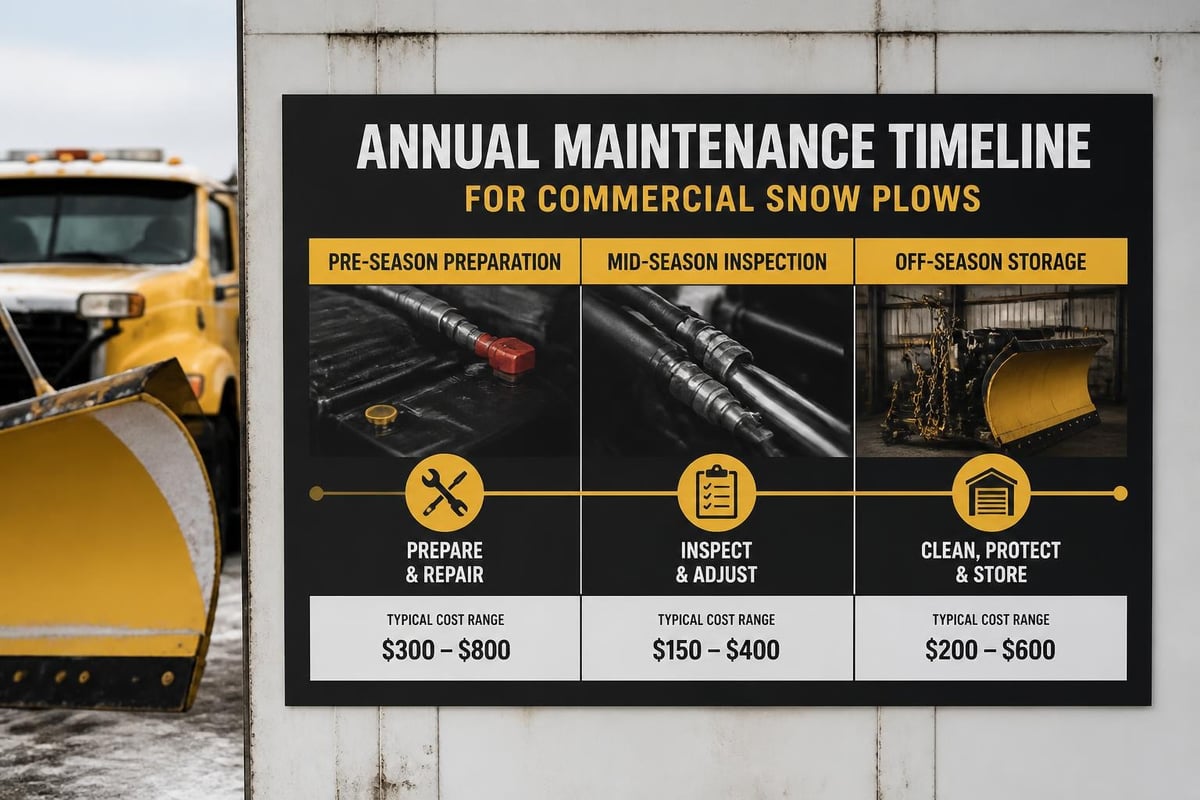
Pre-season inspection and preparation typically costs $300 to $600 per plow, covering hydraulic system checks, blade edge replacement or sharpening, electrical system testing, and fluid changes. Commercial operators serving demanding clients cannot afford equipment failures during snow events, making this preventive investment essential.
Blade cutting edges wear during use and require replacement every season or two, depending on operational intensity. Replacement cutting edges cost $150 to $400 for commercial-grade plows, with installation adding another $100 to $200 if not performed in-house.
Annual maintenance budget items:
- Hydraulic fluid and filter changes ($80 – $150)
- Cutting edge replacement ($150 – $400)
- Trip spring inspection and replacement ($50 – $200)
- Electrical system diagnostics ($75 – $150)
- Paint touch-up and rust prevention ($100 – $300)
Off-season storage in climate-controlled facilities protects equipment from corrosion and weather damage. While some operators store plows outdoors, covered storage extends equipment life and reduces maintenance costs over time.
Repair and Replacement Considerations
Commercial plows endure significant stress, particularly when clearing large parking lots with speed bumps, manhole covers, and other obstacles. Major component failures like hydraulic pump replacement ($600 – $1,200), control valve rebuilding ($400 – $800), or structural frame repair ($500 – $2,000) can occur despite proper maintenance.
Understanding snow plow price variations helps operators anticipate replacement timelines and budget accordingly. Most commercial plows deliver 8 to 12 years of service with proper maintenance, though high-volume operations may experience shorter lifecycles.
Fleet Considerations for Commercial Operations
Commercial snow removal businesses must evaluate snow plow cost across entire equipment fleets rather than individual units. This perspective changes budget calculations and purchasing strategies significantly.
Scaling Equipment Investment
A professional snow removal operation serving Denver's commercial properties might maintain 5 to 15 plow-equipped trucks depending on contract volume. With equipment costs of $8,000 to $15,000 per plow plus installation, initial fleet investment can reach $50,000 to $250,000 or more.
Commercial operators often phase fleet expansion over multiple seasons, balancing contract growth with equipment acquisition. Financing options spread costs across 3 to 5 years, with monthly payments varying based on down payment, interest rates, and term length.
| Fleet Size | Total Equipment Investment | Annual Maintenance Budget | Recommended Service Area |
|---|---|---|---|
| 3 trucks | $30,000 – $50,000 | $5,000 – $8,000 | Small commercial portfolio |
| 8 trucks | $80,000 – $140,000 | $12,000 – $20,000 | Medium commercial operations |
| 15 trucks | $150,000 – $280,000 | $25,000 – $40,000 | Large metro service area |
Backup Equipment Strategy
Experienced commercial operators maintain backup plows to ensure service continuity during equipment failures. This redundancy increases total snow plow cost by 15 to 25 percent but protects against contract penalties and client dissatisfaction during critical snow events.
The comprehensive breakdown of snow plow costs demonstrates how commercial operations must view equipment investment as operational infrastructure rather than simple tool purchases. Understanding these details helps when planning professional snow removal services for commercial clients.
Service Contract Pricing Versus Equipment Ownership
Property managers and facility directors must decide whether outsourcing snow removal or investing in equipment ownership makes financial sense. This decision fundamentally changes how snow plow cost appears in operating budgets.
Professional Service Pricing Models
Commercial snow removal contractors typically charge per push ($150 to $400 for standard lots), hourly rates ($125 to $200 per hour), or seasonal contracts ($2,500 to $15,000+ depending on property size and service frequency). For context on service pricing, snow plow service costs for businesses vary by region, property size, and contract terms.
Seasonal contract advantages include:
- Predictable budgeting without surprise invoices
- Guaranteed service regardless of snowfall frequency
- No equipment investment or maintenance responsibility
- Professional liability coverage through contractor insurance
- 24/7 emergency response capabilities
Single-property owners rarely find equipment ownership cost-effective compared to professional services. The break-even point typically requires managing multiple large properties or campuses where in-house operations justify equipment investment.

Long-Term Cost Analysis
Over a 10-year period, equipment ownership including purchase, installation, maintenance, storage, and operator labor often costs 30 to 50 percent more than equivalent professional services for single properties. However, multi-property portfolios or organizations with existing maintenance staff may find ownership economical.
Professional operators like those providing commercial snow removal throughout Denver spread equipment costs across dozens of client properties, achieving economies of scale impossible for individual property owners.
Financing and Budget Planning
Strategic snow plow cost management requires understanding financing options and budget allocation strategies that align with operational cash flow and seasonal revenue patterns.
Equipment Financing Options
Commercial equipment loans typically offer 3 to 7-year terms with interest rates between 5 and 12 percent depending on creditworthiness and down payment. A $12,000 plow financed over 5 years at 7 percent results in monthly payments near $240, plus installation and maintenance costs.
Financing considerations for commercial buyers:
- Seasonal payment structures matching revenue cycles
- Deferred payment options for pre-season purchases
- Trade-in value for older equipment
- Tax depreciation benefits (typically 5-year schedule)
- Warranty coverage overlap with loan terms
Some dealers offer promotional financing during summer months when snow equipment sales slow, potentially reducing financing costs by 2 to 3 percentage points compared to winter purchases.
Total Cost of Ownership Calculation
Calculating true snow plow cost requires adding all expenses over the equipment's expected lifespan. For a commercial plow with $12,000 purchase price and $1,500 installation, annual maintenance averaging $600, and blade replacement every 18 months at $300, the 10-year total reaches approximately $20,000 to $24,000.
This total cost of ownership figure helps commercial operators determine appropriate pricing for client contracts and ensures profitability despite ongoing equipment expenses. Understanding comprehensive snow plow cost factors enables accurate financial planning.
Regional Cost Variations
Geographic location significantly impacts snow plow cost through dealer pricing, installation labor rates, and equipment demand cycles. Colorado's Front Range region presents specific cost considerations for commercial operations.
Denver Market Pricing
Denver's competitive snow removal market influences both equipment and service pricing. Commercial plow systems in the Denver metro area typically cost 5 to 10 percent above national averages due to high demand and limited dealer inventory during peak seasons. Installation labor rates ranging from $95 to $140 per hour reflect Colorado's skilled labor market.
Property managers evaluating service contracts in Denver should expect per-push pricing between $175 and $450 for standard commercial lots, with seasonal contracts for office campuses starting around $4,000 and reaching $20,000+ for large industrial parks requiring frequent service.
Seasonal Demand Impact
Equipment purchased during summer months often costs 10 to 15 percent less than identical units bought in November or December. Commercial operators planning fleet expansion should leverage off-season pricing to reduce overall snow plow cost.
Similarly, installation scheduling during shoulder seasons (September-October or April-May) may reduce labor costs compared to peak winter demand periods when technicians command premium rates for rush jobs.
Selecting Equipment for Commercial Operations
Commercial snow removal success depends on matching equipment capabilities to client property characteristics and service expectations. This alignment directly affects snow plow cost efficiency and operational profitability.
Property-Specific Requirements
Office campus parking lots with multiple islands and light poles require maneuverable V-plows that can windrow snow efficiently. Industrial parks with long, straight runs benefit from expandable wing plows that maximize clearing width. HOA community streets demand plows that work effectively in residential settings without damaging curbs or landscaping.
Matching plow type to property requirements prevents unnecessary equipment investment and maximizes productivity per labor hour. Resources like selecting the right snow plow for commercial use provide valuable guidance for optimizing equipment purchases.
Equipment selection factors:
- Average property size in service portfolio
- Typical snow accumulation depths
- Obstacle density (light poles, islands, curbs)
- Service time requirements (2-hour versus 4-hour response)
- Vehicle compatibility and existing fleet capabilities
Commercial operators serving diverse property types often maintain multiple plow styles, deploying specialized equipment where it delivers maximum efficiency rather than using one-size-fits-all approaches.
Vehicle Compatibility Considerations
Snow plow cost optimization requires matching plows to appropriately rated vehicles. Installing a heavy commercial plow on an under-rated truck accelerates wear, voids warranties, and creates safety hazards. Most commercial plows require trucks with gross vehicle weight ratings (GVWR) of 8,500 pounds or higher.
The detailed analysis of snow plow costs by type helps commercial operators understand how vehicle compatibility affects total system investment and operational reliability.
Insurance and Liability Factors
Commercial snow removal operations face significant liability exposure, making insurance a critical component of total snow plow cost calculations. Comprehensive coverage protects against property damage claims, personal injury lawsuits, and contract disputes.
Commercial Insurance Requirements
General liability insurance for snow removal operations typically costs $2,500 to $8,000 annually for small to mid-size operations, scaling with revenue and fleet size. Commercial auto insurance adding snow plow coverage increases premiums 15 to 30 percent compared to standard business vehicle policies.
Many commercial clients require contractors to maintain $2 million to $5 million in liability coverage, with certificates of insurance updated annually. These requirements affect operational costs and contract pricing structures.
Risk Management Investment
Beyond insurance premiums, commercial operators invest in risk reduction through operator training, safety equipment, and documentation systems. Pre-storm photography, GPS tracking, and time-stamped service records protect against liability claims and reduce insurance costs through demonstrated risk management practices.
For businesses seeking reliable commercial snow removal without equipment investment complexity, exploring professional Denver snow removal services provides clarity on current market pricing and service options.
Technology Integration Costs
Modern commercial snow removal operations increasingly rely on technology systems that add to snow plow cost but deliver significant operational benefits through efficiency gains and client communication improvements.
GPS and Route Management
Fleet GPS tracking systems cost $800 to $2,000 for initial hardware plus $25 to $50 per vehicle monthly for service plans. These systems document service completion, optimize route efficiency, and provide timestamped records for liability protection.
Route optimization software helps commercial operators minimize fuel costs, reduce overlap, and ensure timely service delivery across large client portfolios. While adding to operational expenses, these systems typically generate 10 to 20 percent efficiency improvements that justify their costs.
Technology investment categories:
- GPS fleet tracking and documentation
- Route planning and optimization software
- Client communication and service verification apps
- Weather monitoring and forecasting subscriptions
- Automated billing and contract management systems
Technology integration transforms snow removal from labor-intensive manual operations into data-driven service businesses that deliver superior client experiences while maintaining profitability despite competitive market pressures.
Understanding snow plow cost across equipment purchase, installation, maintenance, and operational categories enables informed decision-making for commercial property management. Whether investing in equipment ownership or evaluating service contracts, comprehensive cost knowledge ensures budget accuracy and service reliability. Denver Snow Removals brings over 47 years of commercial snow removal expertise to Denver Metro properties, delivering 24/7 emergency services backed by professional equipment and proven operational systems that eliminate your winter weather concerns.